Introduction
The Voice That Crossed Every Border: Why B. J. Thomas Still Belongs to Every Generation
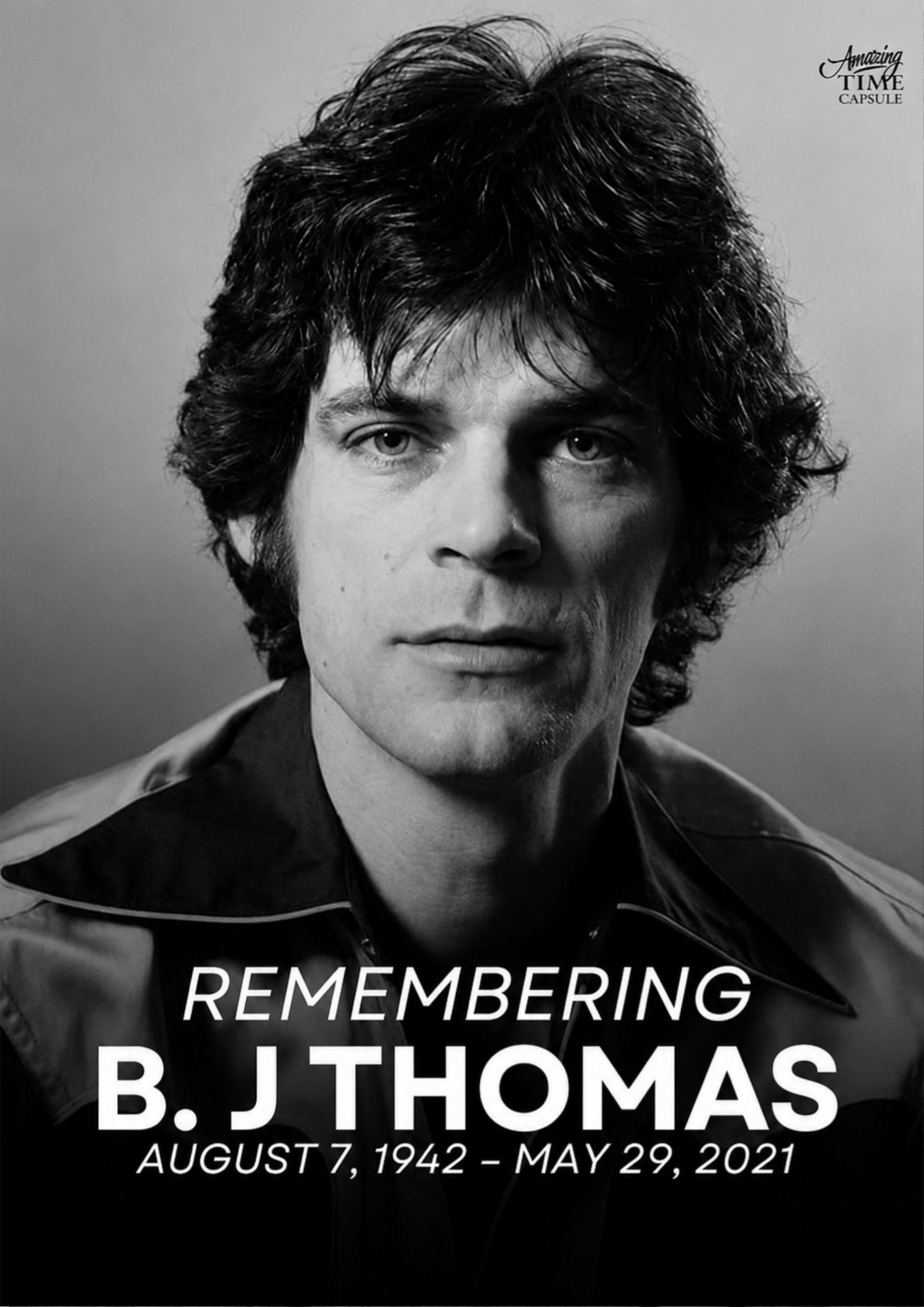
Remembering B. J. Thomas is more than looking back at a beloved singer’s life; it is returning to a voice that seemed to understand the quiet hopes, private disappointments, and enduring faith of ordinary people. Born Billy Joe Thomas on August 7, 1942, and remembered after his passing on May 29, 2021, B. J. Thomas built a career that never fit neatly into one category. That was part of his gift. He could sing country with sincerity, pop with elegance, gospel with conviction, and soft rock with a warmth that made every lyric feel personal.
Raised in Houston, Texas, after being born in Hugo, Oklahoma, Thomas came from the kind of background that shaped many great American voices: church music, local stages, regional bands, and a deep respect for songs that told the truth plainly. Long before he became a household name, he learned how to communicate feeling without exaggeration. His voice was smooth, yes, but never empty. There was a gentle grain in it, a lived-in quality that allowed listeners to believe him whether he was singing about loneliness, comfort, heartbreak, gratitude, or faith.

His first major national moment came with “I’m So Lonesome I Could Cry,” a song already immortalized by Hank Williams. For many singers, taking on such a classic would have been risky. But Thomas did not merely copy the past; he honored it while bringing his own emotional clarity. That recording introduced him as an artist who understood tradition but was not trapped by it. Soon after, “Hooked on a Feeling” helped establish him as a major presence in popular music, proving that his appeal could reach far beyond one audience or one radio format.
Then came the song that would follow him forever: “Raindrops Keep Fallin’ on My Head.” Written by Burt Bacharach and Hal David for Butch Cassidy and the Sundance Kid, it became one of those rare recordings that feels both tied to its time and somehow untouched by time. Its charm lies not only in its melody, but in Thomas’s delivery. He did not oversell the optimism. He sang it with a relaxed confidence, as if reminding listeners that hardship may come, but it does not have to own the soul. The song’s success, including its connection to the Academy Award for Best Original Song and Thomas’s Grammy recognition, turned him into an international figure.
Yet the true measure of B. J. Thomas was not one song alone. Throughout the 1970s, he gave listeners recordings that carried emotional intelligence and melodic grace, including “I Just Can’t Help Believing,” “(Hey Won’t You Play) Another Somebody Done Somebody Wrong Song,” and “Rock and Roll Lullaby.” Each revealed a different shade of his artistry. He could sound tender without being fragile, polished without being distant, and deeply sincere without becoming overly dramatic.

As his career continued, Thomas moved with rare ease into country and gospel music. This was not a retreat from mainstream success; it was an expansion of who he had always been. His later Christian and gospel recordings showed a man singing from conviction, not calculation. For older listeners especially, this part of his journey carries special meaning. It suggests a life not only of achievement, but of searching, growth, and spiritual grounding.
When B. J. Thomas died on May 29, 2021, at his home in Arlington, Texas, after battling lung cancer, American music lost one of its most versatile and comforting voices. But his recordings remain alive because they were built on something stronger than fashion. They were built on melody, honesty, and a voice that welcomed people in.
To remember him now is to remember an artist who crossed genres without losing himself. B. J. Thomas sang for the lonely, the hopeful, the faithful, and the weary. And long after the final note faded, his music still feels like a hand on the shoulder, quietly saying that the rain may fall — but the song goes on.