Introduction
Beyond the Spotlight: The Hidden Songs Dolly Parton Gave to the World Through Other Voices

There are legends, and then there is Dolly Parton — an artist whose name has long stood for warmth, wit, resilience, and the kind of storytelling that reaches across generations. Most readers know her as the radiant voice behind classics like “Jolene,” “Coat of Many Colors,” and “9 to 5.” But what many people may not fully realize is that Dolly’s greatest legacy may extend far beyond the songs she sang herself.
For more than seven decades, Dolly Parton has not only been one of country music’s most beloved performers — she has been one of the most prolific and emotionally gifted songwriters in American music history.
More than 3,000 songs.
Pause for a moment and let that number settle in.
Three thousand songs means more than productivity. It speaks to a life lived in constant conversation with emotion, memory, hardship, hope, faith, and the deeply human moments that music exists to preserve. It means Dolly has not simply performed history — she has helped write the soundtrack to it.
And perhaps what makes this story especially moving for older, thoughtful readers is the realization that many of the songs that shaped entire chapters of our lives came not from the artists who sang them, but from Dolly’s pen.
Some of the most unforgettable songs in modern music history carry her fingerprints.
:max_bytes(150000):strip_icc():focal(749x0:751x2)/Dolly-Parton-092825-1-0bbbf9bf574f4187bc11272e2a29a84e.jpg)
The most astonishing example, perhaps, is “I Will Always Love You.”
For many listeners, that song is forever linked to Whitney Houston’s breathtaking 1992 recording for The Bodyguard. Her version became one of the most celebrated performances in pop history, spending an extraordinary fourteen weeks at No. 1 and turning the ballad into a global anthem of love and loss.
Yet long before Whitney’s soaring vocal made it immortal, the song was born from Dolly’s own heartbreak.
She wrote it in 1973 as a farewell to Porter Wagoner, the mentor and business partner who had played such an important role in her rise. In its original form, the song was not a grand pop ballad but a tender, deeply personal goodbye — dignified, graceful, and emotionally devastating in its restraint.
For readers who value songwriting as emotional truth, this may be one of the most extraordinary stories in music.
The same song lived two completely different lives.
One as intimate country confession.
One as universal heartbreak.
Both timeless.
And both unmistakably Dolly.
Her reach, however, extends far beyond that singular masterpiece.
Take “Rainbowland,” the luminous collaboration with her goddaughter Miley Cyrus.
At first glance, the song may seem like a modern cross-generational moment, but at its heart it reflects something profoundly characteristic of Dolly’s artistry: hope.
The song dreams of a world that is kinder, more united, more compassionate — a theme that resonates especially deeply with older audiences who have witnessed decades of cultural change and still long for gentleness in public life.
It is not merely a song.
It is an appeal to the human spirit.
Then there are the surprises that reveal the astonishing breadth of her writing.
Many readers may be startled to learn that Tina Turner recorded “There’ll Always Be Music,” a Dolly Parton composition, on her 1974 solo debut. Even more remarkable, that album went on to earn Tina a Grammy.
The idea that Dolly’s songwriting could help power a Grammy-winning R&B performance speaks volumes about her range. She was never confined by genre.
Country, pop, gospel, holiday music, crossover ballads — Dolly writes from the heart first, and the genre simply follows.
Her emotional intelligence as a songwriter is perhaps nowhere more evident than in “To Daddy,” recorded by Emmylou Harris.
Written from the perspective of a child observing the quiet pain of a neglected mother, the song is steeped in emotional maturity. It understands family tension, silent suffering, and the kind of domestic sorrow older readers know is often left unspoken.
This is where Dolly’s writing rises above craftsmanship and enters something deeper.
She writes about life as it is lived.
The things families endure.
The things women often carry.
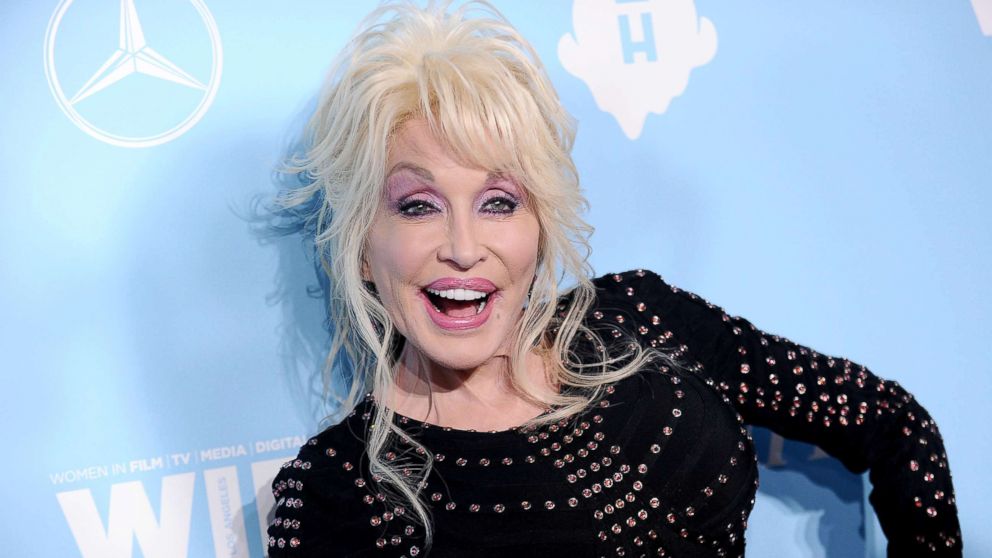
The things children notice even when adults believe they are shielding them.
That truthfulness has always been her gift.
Her songwriting for men is equally striking.
As Dolly herself once reflected, there were fewer female artists in the early years of country music for whom she could write. So she intentionally wrote songs men could record.
That decision quietly shaped the genre.
Songs recorded by artists like Kenny Rogers and Waylon Jennings became extensions of her emotional world.
This is especially poignant for older readers who grew up during the golden era of country music, when storytelling mattered more than spectacle.
Dolly understood men’s voices not as archetypes, but as emotional vessels.
She wrote fathers, drifters, lonely men, grieving sons, and lovers with startling sensitivity.
Perhaps that is why her songs feel so deeply human.
They are not written to impress.
They are written to reveal.
And that, ultimately, may be the reason Dolly Parton’s legacy feels so much larger than fame.
Yes, she is an icon.
Yes, she is a cultural treasure.
But beyond the rhinestones, the laughter, and the unforgettable public persona is something even more enduring:
a woman who has spent her life giving language to feelings others could not name.
For readers of wisdom and life experience, that may be the most profound legacy of all.
Some artists leave behind performances.
Dolly Parton has left behind emotions.
Memories.
Moments.
Songs that accompanied heartbreak, marriage, Christmas mornings, lonely drives, and quiet evenings of reflection.
More than 3,000 songs.
And perhaps many of the ones you loved most were hers all along.
That is not merely success.
That is immortality through music.