Introduction
Bubba Strait’s Quiet Road: How George Strait’s Son Built His Own Texas Legacy Beyond the Shadow of the King
Bubba Strait’s Quiet Road: How George Strait’s Son Built His Own Texas Legacy Beyond the Shadow of the King
When your father is George Strait, the man millions call the King of Country, the world naturally expects you to live beneath a very large shadow. But Bubba Strait, born George Strait Jr., has never seemed interested in chasing fame for its own sake. Instead, he has built a life that feels deeply rooted in Texas values — family, hard work, rodeo tradition, quiet humility, and music that speaks from real experience.
The story of George Strait’s son is not simply the story of a famous child following a famous father. It is the story of a man who found his own rhythm, first in the rodeo arena and later in the songwriting room. Born on May 14, 1981, Bubba Strait grew up surrounded by the wide-open spirit of Texas. He attended Texas A&M University, where he developed his skills as a roper, eventually competing as a professional roper with the Professional Rodeo Cowboys Association.
That early rodeo life matters because it shaped the man behind the songs. Rodeo demands patience, discipline, courage, and resilience — the same qualities that often define the best country music. Long before he became known as a songwriter, Bubba Strait was living the kind of life that gives songs their truth.

After retiring from professional roping, Bubba turned more fully toward music. And here, his talent began to reveal itself in a powerful way. As a songwriter, he has co-written more than 30 songs, many of them appearing on his father’s albums. His collaborations with George Strait include beloved tracks such as “Here For a Good Time,” “Living For the Night,” and “Let It Go.” These songs are not merely family projects. They show a genuine gift for storytelling, emotional honesty, and the kind of plainspoken wisdom country audiences still value.
Bubba’s work can be heard across several major George Strait albums, including Twang, Here for a Good Time, Love Is Everything, Cold Beer Conversation, and Honky Tonk Time Machine. Through those songs, he helped shape a later chapter of his father’s legendary career while also proving that his own creative voice belongs in the room.
One of the most touching parts of Bubba Strait’s story is the musical bond between father and son. His voice was heard years earlier on “Heartland,” the opening song from the 1992 film Pure Country. Decades later, he stood beside his father at the 2019 Houston Rodeo Show to sing “God and Country Music.” For longtime fans, that moment felt like more than a performance. It felt like legacy becoming visible.

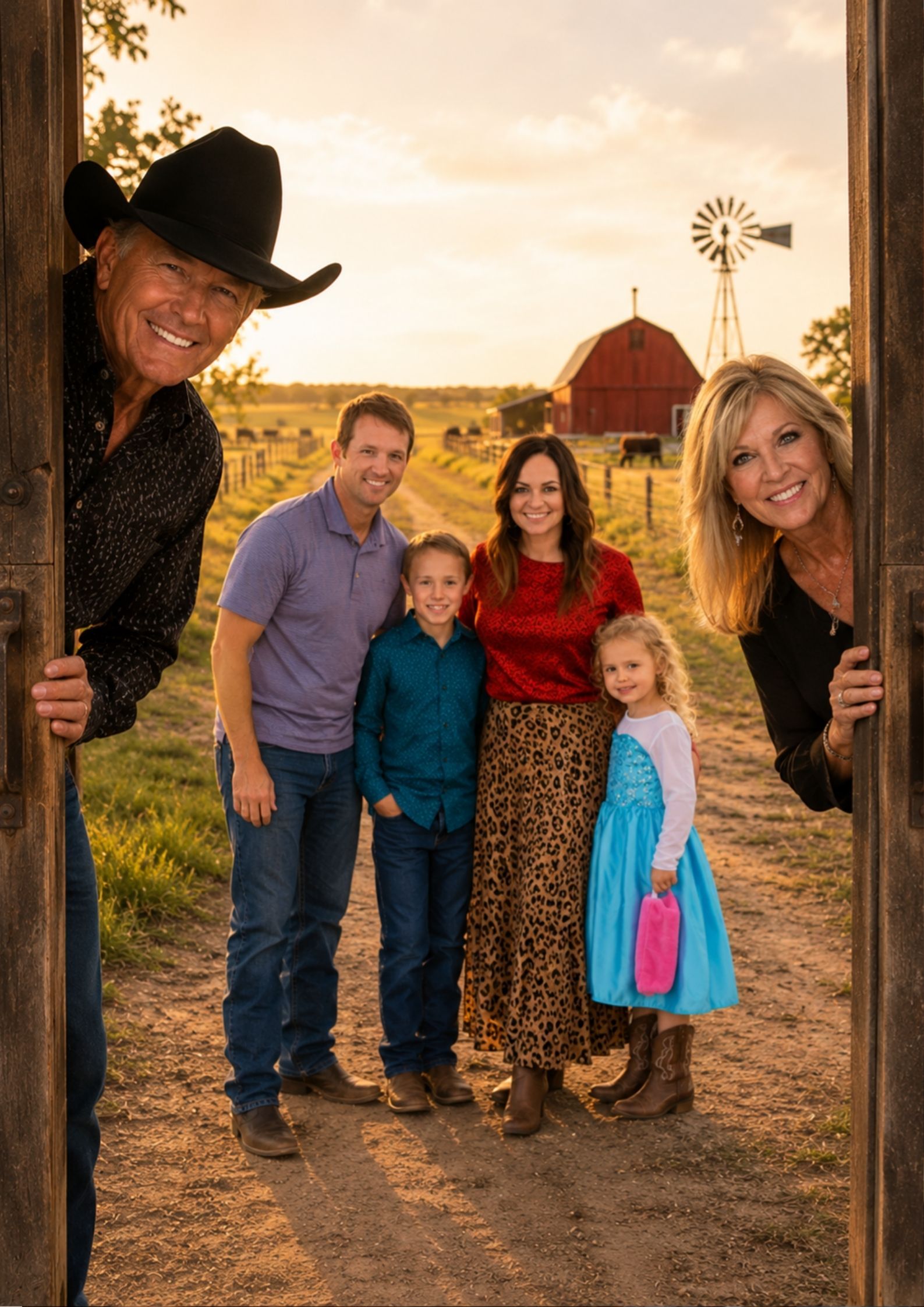
But Bubba’s life is not defined by music alone. His personal life reflects the same grounded spirit. He met his wife, Tamara Strait, at a San Antonio Spurs game in 2005. The couple became engaged in 2010 and married later that year. Together, they have built a family life near San Antonio, Texas, raising their two children, George “Harvey” Strait III and Jilliann Louise Strait.
Through Bubba, Tamara, Harvey, and Jilliann, the Strait family legacy continues not as a performance, but as a living family story. Harvey has already shared the stage with his grandfather, joining George Strait for “God and Country Music” at the Houston Rodeo — a moment that quietly connected three generations through song.
What makes Bubba Strait especially compelling is that he honors his father’s legacy without trying to copy it. He has lived as a roper, husband, father, songwriter, and proud Texan. He has contributed to country music while keeping his life centered on the values that shaped him.
In the end, Bubba Strait may always be known as George Strait’s son, but his story deserves to stand on its own. He represents a quieter kind of legacy — not loud, not flashy, but steady, loyal, and deeply authentic. Like the best country songs, his life is built on roots, family, work, and truth.