Introduction
THE SONG THAT REVEALED WHERE GEORGE STRAIT’S HEART NEVER LEFT—EVEN AFTER THE WHOLE WORLD KNEW HIS NAME
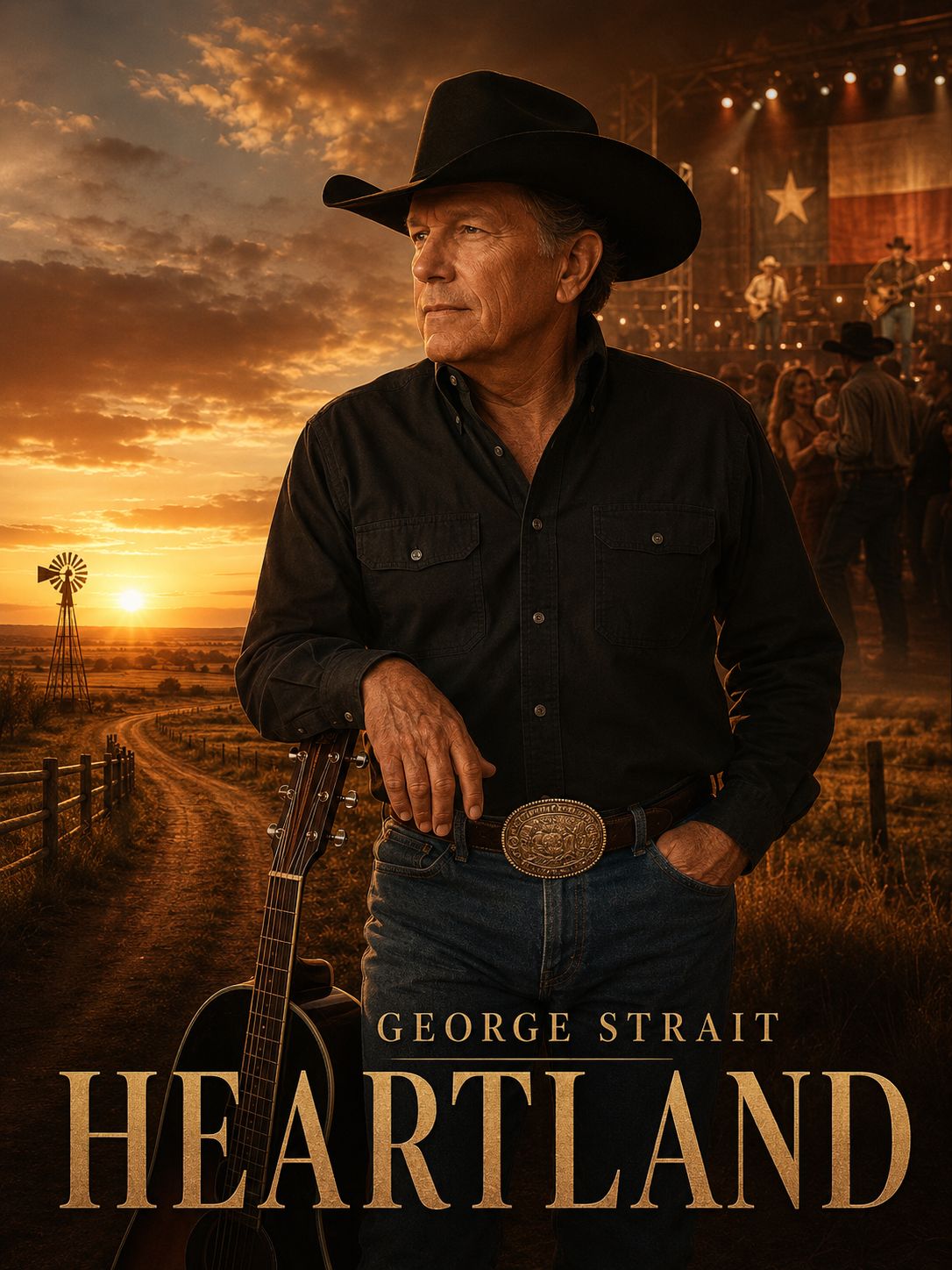
There are songs that rise to the top of the charts, songs that collect awards, and songs that fill arenas with thousands of voices. Then there are recordings that become something more enduring. They begin to represent an artist’s character, values, and understanding of home. For George Strait, few songs capture that connection more clearly than “Heartland,” a spirited celebration of country music, ordinary people, and the places that continue shaping us long after we have traveled beyond them.
Across one of the most remarkable careers in country music history, George Strait has recorded songs for nearly every season of life. Listeners have followed the lonely road of “Amarillo by Morning,” felt the lasting devotion of “I Cross My Heart,” smiled at the innocent memories within “Check Yes or No,” and considered the passing of time through “Troubadour.” Each recording reveals a different side of an artist whose success was built not upon constant reinvention, but upon consistency, restraint, and an extraordinary ability to recognize the emotional truth inside a song.
Yet “Heartland” occupies a particularly meaningful place within that catalog.
Released in 1993 from the soundtrack to Pure Country, the song reached the top of the country chart and became another major success for Strait. Written by Steve Dorff and John Bettis, it was not composed by George himself. Nevertheless, he performed it with such natural conviction that it felt closely connected to his own story. In his voice, the song became more than a lively tribute to country music. It became an expression of the world that had shaped him before stadiums, awards, record sales, and the title King of Country Music ever entered the conversation.
George Strait was born in Poteet, Texas, and raised near Pearsall in the South Texas countryside. His early life was connected to ranching, livestock, open land, and the responsibilities that accompany agricultural work. Those experiences mattered. They gave him an understanding of patience, discipline, and the quiet dignity of completing a job properly, even when no audience was watching.
Long before he became a recording star, Strait also served in the United States Army. While stationed in Hawaii, he began performing with an Army-sponsored country group. That period offered him valuable experience, but it also reflected the practical path that has always defined his public image. His career did not begin as an overnight invention created by a marketing campaign. It developed gradually through military service, college performances, Texas dance halls, and years spent learning how to hold the attention of a room through music rather than spectacle.
Those beginnings can be heard in “Heartland.”
The song opens with tremendous energy, driven by bright fiddles, confident rhythm, and the unmistakable spirit of a Saturday-night dance hall. It immediately invites listeners into a musical landscape built from traditional country sounds. Yet beneath its lively arrangement lies a deeper message. The heartland is not presented merely as a region on a map. It represents a way of living—a commitment to work, family, community, tradition, and music that speaks directly rather than hiding behind unnecessary decoration.
That idea feels inseparable from George Strait’s career.

Throughout decades of changing trends, Strait rarely appeared interested in chasing whatever style happened to dominate the moment. Country radio evolved, production techniques became more elaborate, and new generations of artists arrived with different influences. George Strait continued to stand near a microphone in a pressed shirt, boots, jeans, and a cowboy hat, trusting that a well-written song delivered honestly would always find an audience.
That trust became one of his greatest strengths.
He never needed dramatic stage movements to create authority. He did not overwhelm songs with vocal displays intended to prove his ability. Instead, he understood when to hold a note, when to allow silence into a performance, and when to let the lyric carry the emotional burden. His voice possessed clarity and warmth, but also a certain distance that allowed listeners to place their own experiences inside the story.
In “Heartland,” that understated confidence becomes a form of celebration. George does not sound like an outsider romanticizing rural America. He sounds like someone who knows the rhythm of that life and respects the people living it. The performance recognizes that country music did not begin in corporate offices or carefully planned promotional meetings. It grew from families, front porches, churches, barns, dance halls, working communities, and stories passed from one generation to the next.
For older listeners, the song can awaken memories of a country that once seemed slower and more connected. It may recall local radio stations playing fiddle and steel guitar, community dances where neighbors knew one another, or long drives across landscapes untouched by large developments. It may bring back the smell of summer fields, the sound of screen doors closing, or evenings when music was experienced together rather than privately through headphones.
Yet “Heartland” is not valuable only as nostalgia.

Younger listeners continue discovering George Strait because his music offers something increasingly rare: emotional directness without exaggeration. His recordings do not demand that audiences understand a particular era before they can appreciate them. The stories remain accessible because they concern enduring human experiences—leaving home, remembering childhood, keeping promises, enduring disappointment, and recognizing that success cannot replace belonging.
That universal quality explains why George Strait’s music has crossed generations so effectively.
A listener does not need to have grown up on a Texas ranch to understand the emotional meaning of home. Home may be a farming community in Iowa, a mountain town in Tennessee, a neighborhood outside Chicago, or a coastal settlement where families have remained for generations. The details differ, but the foundation remains familiar. Home is where identity begins. It is where people learn how to treat others, how to work, what to value, and what kind of person they hope to become.
George Strait carried that foundation with him wherever his career led.
Even after becoming one of the most successful artists in country music, he maintained a strong connection to Texas and the ranching life. That continuity strengthened his credibility. Audiences did not view the cowboy image as a costume created for the stage. It belonged to the man. Strait’s music and public identity seemed to arise from the same set of values, which is why songs about rural life, responsibility, and belonging never sounded artificial when he performed them.
The film Pure Country reinforced that image through the story of a singer who becomes exhausted by the machinery of fame and must return to his roots to remember why he began making music. While the film was fictional, its central conflict suited George Strait perfectly. The character learns that bright lights and elaborate production cannot substitute for authenticity. The journey home becomes a journey back toward truth.
Within that story, “Heartland” functions almost like a statement of purpose.
The song reminds audiences that country music is strongest when it remembers the people who gave it life. It celebrates instruments that carry history within their sound and communities that may never appear glamorous but possess a deep cultural richness. George Strait’s delivery adds credibility because his entire career has reflected the same philosophy: honor the song, respect the audience, and never allow fashion to erase identity.
That approach helped him become more than a successful entertainer.
He became a symbol of stability within country music. As other artists shifted direction or attempted to follow changing commercial tastes, Strait remained remarkably dependable. Listeners knew what his name represented: strong melodies, careful songwriting, traditional instrumentation, and a voice that never mistook volume for sincerity.
This consistency did not mean every recording sounded identical. His catalog includes western swing, honky-tonk, romantic ballads, reflective narratives, and energetic dance songs. What remained constant was the integrity of the performance. Whether singing about heartbreak, marriage, parenthood, cowboys, or the passage of time, George Strait treated each lyric as though it belonged to a real person whose story deserved respect.
More than three decades after its release, “Heartland” still sounds welcoming, confident, and alive. The fiddle retains its brightness, the rhythm still encourages movement, and Strait’s voice continues to carry the calm assurance of a man who never needed to explain where he stood. The recording has aged well because it was never dependent upon temporary production fashions. Its foundation was traditional country craftsmanship, and craftsmanship does not lose value merely because time passes.
Perhaps that is the song’s greatest achievement.
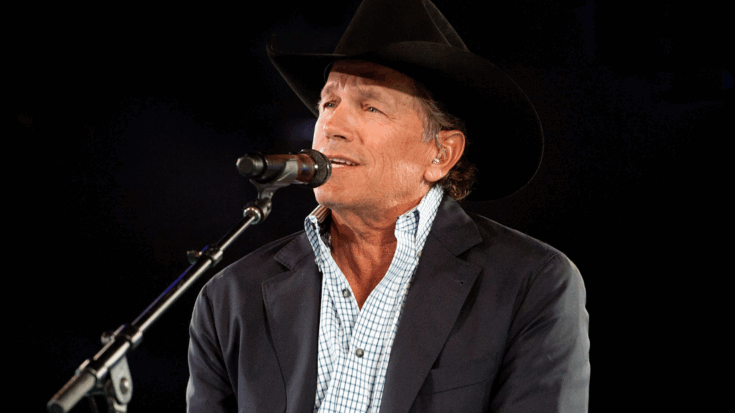
It reminds listeners that moving forward does not require abandoning the places and principles that formed us. Success may change circumstances, but it should not erase memory. Roads may extend across thousands of miles, yet part of the traveler always remains connected to the place where the journey began.
For George Strait, the heartland was never simply a subject chosen for a successful song. It was present in his Texas upbringing, his military service, his years in dance halls, his loyalty to traditional country music, and the quiet discipline with which he approached fame. He did not need to announce those values repeatedly. They could be heard in the way he sang.
That is why “Heartland” remains more than another No. 1 recording. It is a musical portrait of identity, belonging, and gratitude. It celebrates the communities that preserve traditions without demanding recognition and the people who continue working while the wider world moves rapidly around them.
George Strait traveled from South Texas to the largest stages in America, but his music never forgot the road home. In “Heartland,” listeners can still hear that road beneath every fiddle, every steady beat, and every word delivered with unmistakable conviction.
The world may remember him as the King of Country Music, but the song reveals something even more important: beneath the crown remained a Texas country singer who always knew exactly where his heart belonged.