Introduction
RILEY KEOUGH “FURIOUS” OVER ELVIS’S SECRET JOURNALS? THE VIRAL FAMILY SCANDAL THAT BEGINS TO COLLAPSE WHEN THE EVIDENCE IS EXAMINED
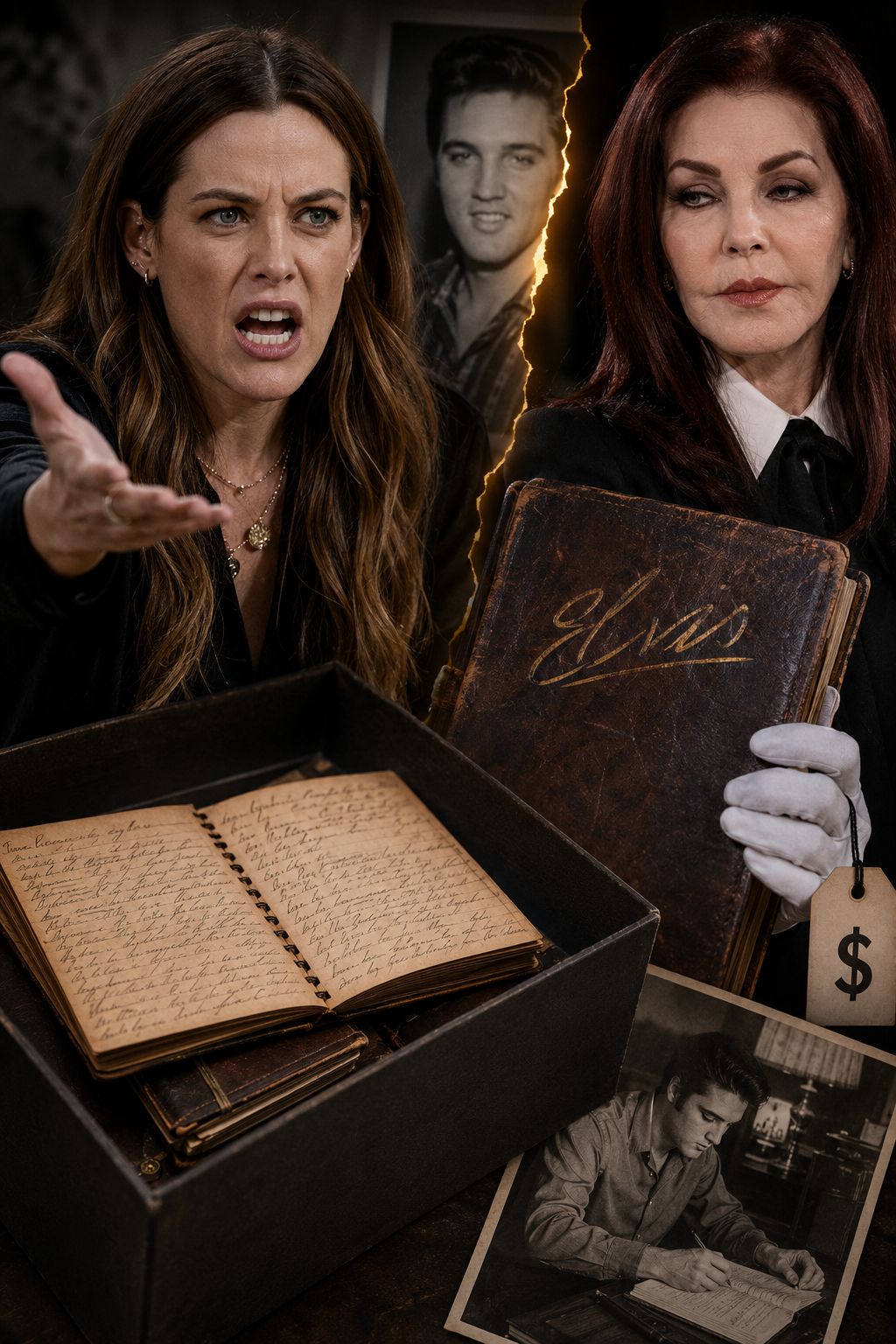
A sensational story has begun moving through the darker corners of the internet: Riley Keough, granddaughter of Elvis Presley and current custodian of Graceland, supposedly discovered that her grandmother, Priscilla Presley, had sold the King’s deeply personal journals. According to the dramatic headlines, Riley was “furious,” believing that irreplaceable pieces of family history had been handed to private collectors for money. It is exactly the sort of story designed to stop an Elvis admirer in mid-scroll. It contains everything a modern celebrity scandal requires—family betrayal, hidden writings, valuable memorabilia, and a granddaughter fighting to protect the voice of a grandfather she never had the chance to know.
There is only one serious problem: no dependable evidence has been produced to show that this happened.
The claim appears primarily in social-media videos and posts using emotionally charged language, but those presentations do not provide a verifiable sales record, auction catalogue, named purchaser, authenticated journal, statement from Riley, or confirmation from Priscilla. They repeat the allegation as though it were established news while offering no documentary trail that independent reporters could examine.
That absence matters because an Elvis Presley journal would not be an ordinary household object. A genuine collection of his private writings would carry immense historical, emotional, and commercial value. A legitimate public sale would almost certainly create records involving provenance, authentication, ownership, dates, and an auction house or private broker. Yet the viral versions of the story provide none of those essential details. They offer anger without a direct quotation, a sale without a receipt, and journals without even a clearly documented description of what those journals contained.
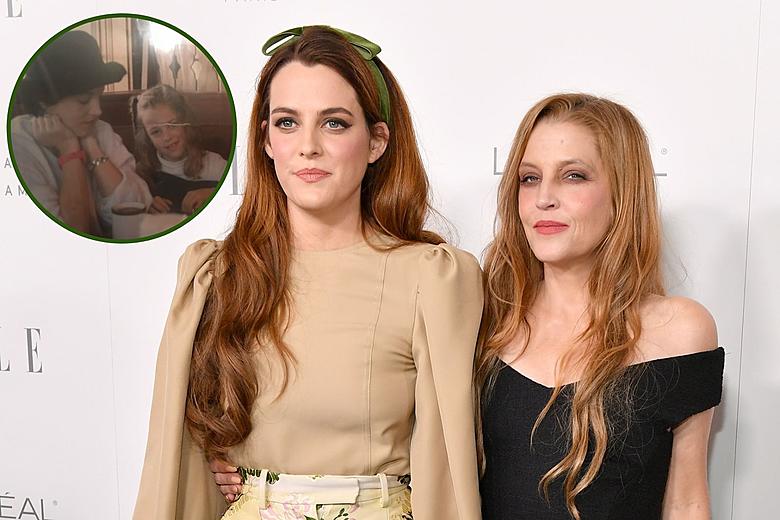
The rumor may sound believable because the Presley family has endured genuine disagreements about inheritance, control, and responsibility. After Lisa Marie Presley died in January 2023, Priscilla challenged an amendment to her daughter’s trust that placed Riley in a central position of authority. The dispute generated extensive headlines before the two sides reached a settlement. Riley later said that the family had achieved “clarity,” while Priscilla maintained that she and her granddaughter had never truly stopped being on good terms.
Those real events provide fertile ground for invented extensions. Once the public has seen two relatives connected to a courtroom disagreement, almost any later rumor can be made to sound plausible. A video creator needs only to mention “another betrayal,” add mournful music, and place photographs of Riley and Priscilla beside an image of Elvis. The audience’s memory of the earlier legal dispute supplies the emotional credibility that the new allegation itself lacks.
The true public record presents a more complicated and less theatrical relationship. Riley has spoken of her responsibility to preserve Graceland and has specifically described her hope of continuing the work performed first by Priscilla and later by Lisa Marie. That statement does not sound like a woman publicly accusing her grandmother of casually destroying the family legacy. It reflects a shared historical chain in which three generations have participated in protecting Elvis’s home and cultural importance.
Riley has also demonstrated that she is prepared to act decisively when the estate faces a genuine threat. In 2024, she went to court to prevent a proposed foreclosure sale of Graceland, arguing that the documents supporting the attempted sale were fraudulent. A judge halted the auction, and Elvis Presley Enterprises supported the effort to keep the property secure. This was not anonymous outrage attributed to her by internet narrators; it was a documented legal action with filings, identifiable parties, and public consequences.

There have also been authentic controversies involving Elvis memorabilia. Jewelry, performance objects, letters, and other artifacts have appeared at auction, sometimes attracting questions about ownership and authenticity. In 2024, Graceland disputed the historical claims connected to certain items sold through GWS Auctions, while the auction company defended its material. Reuters separately reported on a sale featuring Elvis jewelry and a microphone. These are documented disputes, but they do not establish that Priscilla sold private Elvis journals or that Riley reacted with fury.
The distinction may seem overly cautious to readers who enjoy a strong family drama, but it protects something important: Elvis Presley’s history should not be rewritten for easy clicks. His legacy already contains enough genuine conflict, grief, financial complexity, and unanswered questions. Inventing secret betrayals does not deepen that story. It reduces real people to characters in an endless soap opera and encourages fans to treat suspicion as evidence.
For older admirers, the idea of Elvis’s private journals naturally carries enormous emotional appeal. Such pages might reveal the man behind the famous image—the son who mourned his mother, the father who adored Lisa Marie, the gospel singer searching for spiritual peace, or the exhausted performer struggling under expectations few human beings could bear. Fans would understandably feel that these writings belonged somewhere safe, preserved for family or serious historical study rather than scattered among anonymous collectors.
That feeling is legitimate. The alleged event is not yet substantiated.

It is also easy to understand why Riley has become the central figure in stories about protecting Elvis. After the death of her mother, she inherited not simply valuable property but a profound public responsibility. She has described a desire to preserve the family home, completed Lisa Marie’s memoir, and spoken about carrying forward her mother’s intentions. Her role invites the image of a vigilant granddaughter standing between Elvis’s memory and anyone who might exploit it.
Yet admiration for Riley should not be used to place words in her mouth. There is no verified public statement in which she declares herself furious over a sale of Elvis journals. There is no credible reporting establishing that Priscilla conducted such a sale. Until documents, direct quotations, or reliable independent confirmation emerge, the responsible description is not “family scandal.” It is an unsupported internet claim.
Perhaps the real story is more revealing than the rumor itself. Nearly five decades after Elvis’s death, the Presley name remains powerful enough that a vague allegation can travel across the world without proof. People still feel protective of his private life. They still fear that pieces of him may disappear behind closed doors. They still respond to the possibility of family conflict as though Elvis’s legacy belongs partly to everyone who ever found comfort in his voice.
That devotion deserves better than manufactured certainty.
Riley Keough may indeed be one of the most important guardians of Elvis Presley’s legacy, and Priscilla Presley has played a central role in keeping Graceland available to the public. Their relationship has faced real legal and emotional pressures, but the supposed sale of secret journals remains unverified. Until convincing evidence appears, the explosive headline tells us less about what happened inside the Presley family than it does about an internet culture willing to turn every silence into betrayal—and every beloved memory into merchandise.