Introduction
ROD STEWART – “HAVE YOU EVER SEEN THE RAIN”: THE TIMELESS SONG THAT REMINDS US EVEN THE BRIGHTEST DAYS CAN HIDE A BROKEN HEART
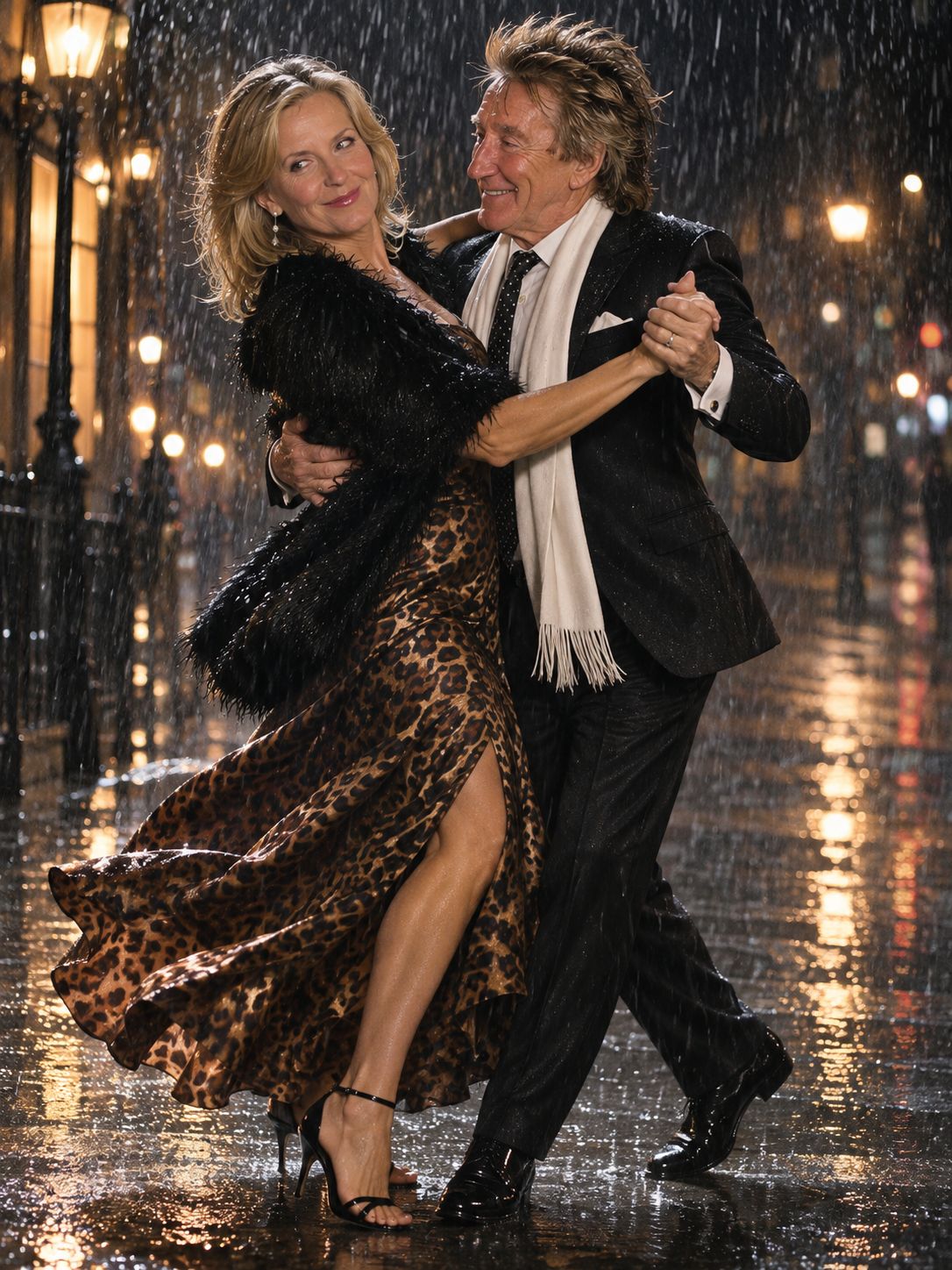
Some songs entertain us for a few minutes, while others stay with us for a lifetime, quietly returning whenever memories become stronger than words. Rod Stewart’s “Have You Ever Seen the Rain” belongs to that rare second category. With his unmistakable raspy voice, remarkable emotional depth, and decades of musical experience, Rod Stewart transforms a familiar classic into something deeply personal. What begins as a simple question about rain falling on a sunny day gradually becomes a moving reflection on life, heartbreak, hope, and the passage of time. For listeners who have experienced both the joys and disappointments of growing older, this performance carries a meaning that reaches far beyond the melody.
Originally written by John Fogerty and released by Creedence Clearwater Revival in 1971, “Have You Ever Seen the Rain” became one of the most recognizable songs of its generation. Its seemingly straightforward lyrics captured a complicated emotional truth: sometimes, sadness arrives precisely when everything appears to be going well. Fogerty has explained that the song was connected to tensions within Creedence Clearwater Revival during a period when the band was enjoying enormous success. From the outside, their world seemed filled with sunshine, but behind the scenes, uncertainty and personal difficulties were beginning to overshadow their achievements. That contrast between outward happiness and private struggle gave the song an enduring emotional power.
When Rod Stewart approaches this celebrated composition, he brings an entirely different lifetime of experiences to its familiar words. His interpretation, featured on his 2006 album Still the Same… Great Rock Classics of Our Time, carries the warmth and character of an artist who has spent decades understanding the complicated relationship between music and human emotion. Stewart does not need to overwhelm the listener with vocal gymnastics or dramatic gestures. Instead, his weathered, expressive voice gives the song a conversational intimacy, as though an old friend were sitting beside us, sharing memories of the moments when life did not unfold as expected.
One of the most remarkable qualities of Rod Stewart’s voice has always been its ability to communicate vulnerability without sacrificing strength. From his early work with The Faces to his extraordinary solo career, Stewart developed a vocal identity that could express youthful excitement, deep regret, tenderness, and resilience. His distinctive gravelly tone became a musical signature, but its true value lies in the emotion it communicates. In “Have You Ever Seen the Rain,” that voice seems especially appropriate because the song is not simply asking about the weather. It is asking whether we have ever experienced sadness in circumstances where happiness should have been waiting.

For many older listeners, this question carries an almost immediate sense of recognition. Life teaches us that happiness and sorrow are rarely separated into neat chapters. A family celebration may bring back memories of someone who is no longer there. A successful career can coexist with sacrifices that only become clear years later. A beautiful afternoon may awaken thoughts of childhood, distant friendships, or places we once called home. The rain falling beneath the sunshine becomes a powerful metaphor for these contradictions, reminding us that even our happiest seasons can contain traces of longing.
Musically, Stewart’s rendition respects the accessible, memorable structure that made the original recording so beloved. The arrangement maintains a steady rhythm and a gentle sense of movement, allowing the melody to unfold naturally rather than forcing the emotional message. Its straightforward musical foundation creates space for the voice to remain at the center of the performance. This restraint is important because “Have You Ever Seen the Rain” does not depend on elaborate production to communicate its meaning. Its beauty comes from simplicity, sincerity, and the remarkable ability of a few familiar chords to awaken memories that have remained silent for years.
There is also something particularly moving about hearing a song associated with the early 1970s interpreted by an artist whose own career helped define that unforgettable era. Rod Stewart emerged as one of rock music’s most distinctive voices during a period of extraordinary cultural change. His recordings became part of the soundtrack to countless lives, accompanying first friendships, long journeys, family gatherings, and important personal milestones. When he revisits a classic such as this one, he creates a bridge between generations, reminding listeners that great music does not belong exclusively to the decade in which it was written. It continues to evolve as the people listening to it grow older.