Introduction
THE AUTOPSY THAT CHANGED THE STORY: What Really Happened to Lisa Marie Presley in Her Final Hours
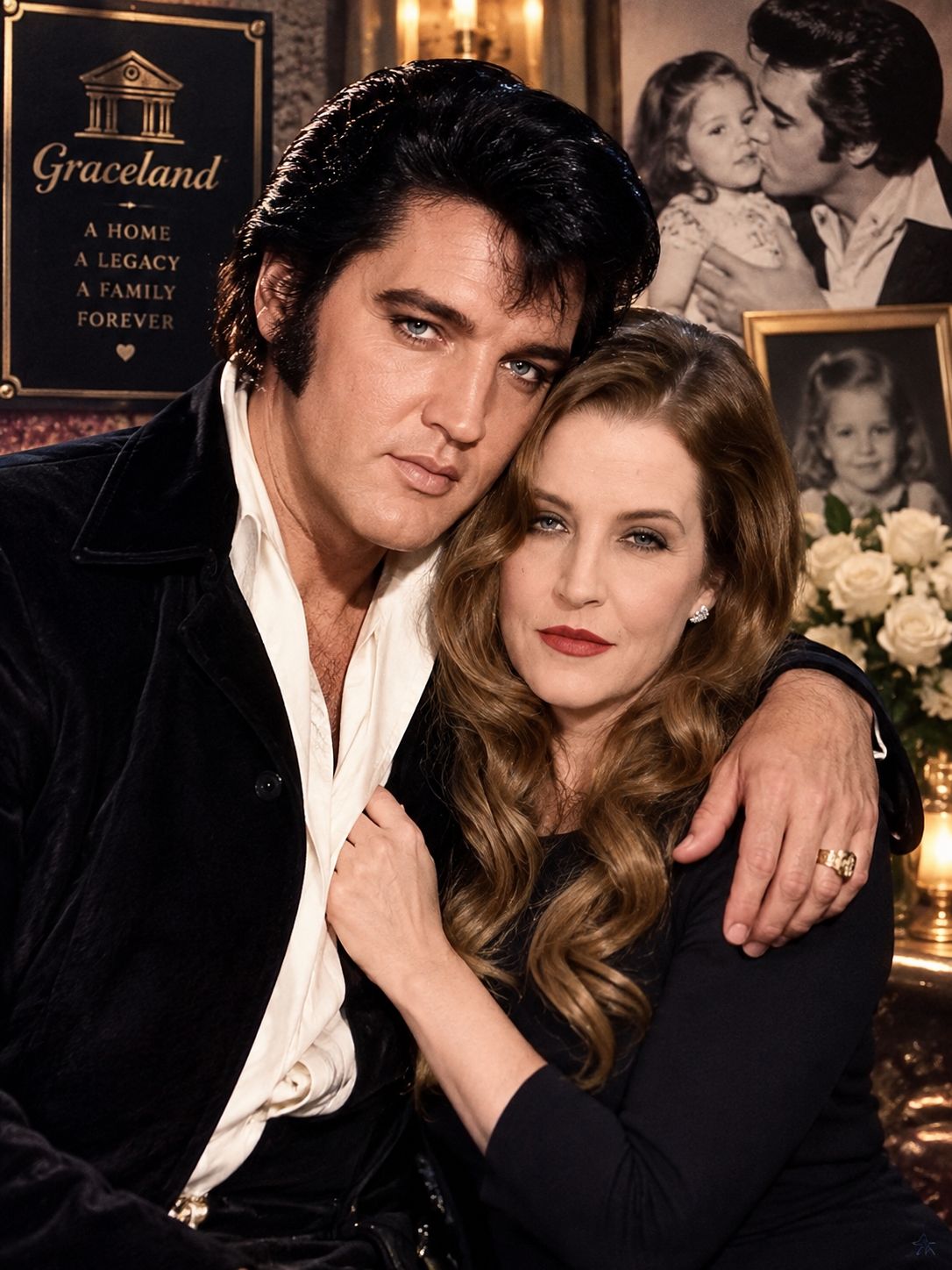
More than three and a half years have passed since Lisa Marie Presley died on January 12, 2023, yet one question continues to haunt admirers of the Presley family: what actually happened to Elvis Presley’s only daughter in those final hours? The first reports were frighteningly simple. Lisa Marie had been found unresponsive at her California home, emergency personnel performed resuscitation, and she was rushed to West Hills Hospital and Medical Center. The public heard the words “cardiac arrest,” and for many Americans who remembered losing Elvis Presley at only 42, the similarities seemed almost unbearably cruel. But months later, the official autopsy revealed that the real medical story was considerably different—and far more complicated.
The Los Angeles County Medical Examiner ultimately determined that Lisa Marie, 54, died from the sequelae of a small bowel obstruction. The obstruction had been caused by adhesions—bands of internal scar tissue—that developed after bariatric surgery she had undergone years earlier. The medical examiner classified her death as natural, not accidental, and found no evidence of foul play.
That distinction matters. Cardiac arrest describes what the heart did at the end; it does not necessarily explain what caused the body to reach that point. The autopsy provided the deeper answer. Lisa Marie had developed what the report described as a strangulated small bowel, a dangerous condition in which the intestine becomes obstructed and its blood supply can be compromised. Such a condition can deteriorate rapidly and become life-threatening.
According to information contained in the medical examiner’s findings, Lisa Marie had experienced abdominal pain before she was found unresponsive. Medical accounts of the report also described a severely distended abdomen and serious metabolic abnormalities after she reached the hospital. Doctors attempted to save her, but after another cardiac arrest, she died that afternoon.
For longtime Presley followers, perhaps the most emotionally difficult part of the report was realizing how an internal medical emergency could remain largely invisible until it became catastrophic. Only two days earlier, Lisa Marie had appeared publicly at the Golden Globe Awards, supporting Elvis, the film about her father starring Austin Butler. Viewers later returned to footage from that evening, studying her movements and appearance for signs that something had been wrong. But hindsight can create certainty where none existed at the time. An autopsy can explain what happened medically; it cannot prove exactly what observers should have recognized two days earlier.
Then came the toxicology findings, and with them another wave of sensational headlines.
The report identified therapeutic levels of oxycodone in Lisa Marie’s blood, as well as buprenorphine and a metabolite associated with quetiapine. But the medical examiner did not determine those substances to be the cause of her death. The official finding remained the bowel obstruction resulting from adhesions associated with previous surgery.
That is an important point because Lisa Marie had previously spoken publicly about struggles involving prescription medication. It would be easy to take that history, combine it with toxicology terminology, and construct a much more dramatic story than the forensic evidence supports. But the autopsy does not describe a fatal overdose. The medications detected were considered separately from the anatomical condition that the medical examiner concluded caused her death.
And perhaps that makes the story even sadder.
Lisa Marie Presley spent her entire life surrounded by extraordinary events. She was born into American royalty, carried the Presley name from childhood, lost her father when she was only nine, endured intense public scrutiny, built her own musical career, and later suffered the devastating death of her son Benjamin Keough in 2020. Yet the medical event that ended her life was not something cinematic or mysterious. It was a severe complication associated with internal scar tissue left from an earlier operation—a recognized long-term complication of that type of surgery.
By September 2026, there has been no official reversal of that determination. The public record still lists Lisa Marie’s death as natural, caused by complications of the small bowel obstruction.
But an autopsy report can only tell part of a human story.
It can describe scar tissue, organs, toxicology, blood chemistry and the sequence of medical collapse. It cannot describe what Priscilla Presley felt when she realized she had lost her daughter. It cannot measure the grief experienced by Riley Keough and Lisa Marie’s younger children. It cannot explain what it meant for millions of Elvis fans to watch another generation of the Presley family disappear far too young.