Introduction
THE BATTLE OVER ELVIS’S LEGACY: Why a Family Dispute Is Reigniting Old Questions About the King’s Final Years
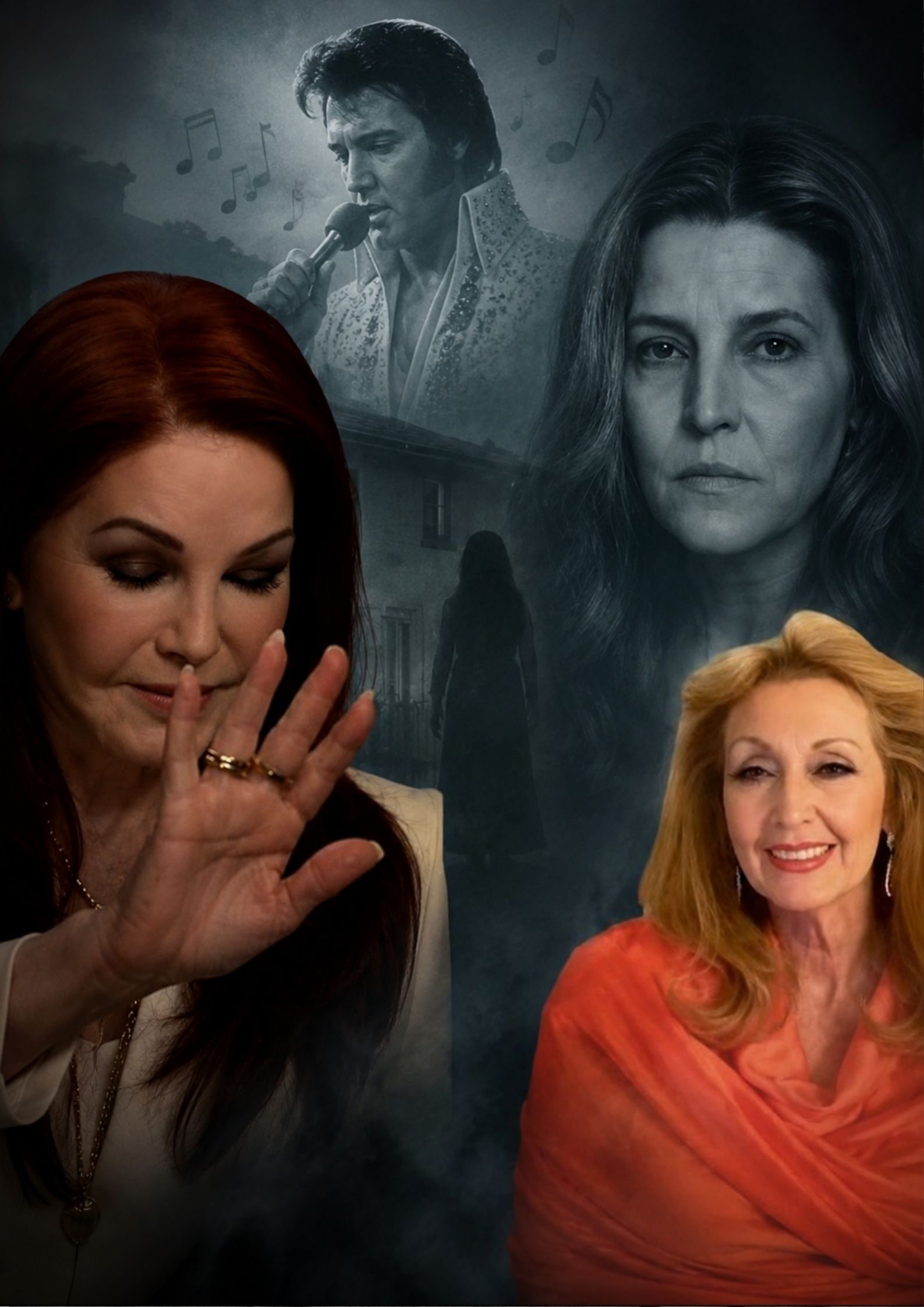
For nearly five decades after his passing, Elvis Presley has remained one of the most discussed and admired figures in music history. His voice, charisma, and cultural influence continue to inspire generations of fans around the world. Yet alongside the celebration of his extraordinary career, debates about his personal life and legacy continue to emerge, often generating passionate responses from those who knew him best. The latest chapter in that ongoing conversation comes from a public disagreement involving Priscilla Presley and one of Elvis’s relatives, a dispute that has once again drawn attention to the complex and emotional questions surrounding the King of Rock and Roll.
The controversy centers on Priscilla’s memoir, Softly As I Leave You: Life After Elvis, a book that reflects on her experiences following Elvis’s death in 1977 and explores the challenges she faced in the years that followed. As with many memoirs written by individuals closely connected to famous figures, the book offers personal recollections, interpretations, and reflections on events that shaped both her life and the Presley family story. While many readers have welcomed the memoir as an intimate look at a difficult period, others have questioned certain accounts and conclusions presented within its pages.
Among the most vocal critics is Donna Presley, a cousin of Elvis who believes the family has not been represented fairly in discussions about his life and legacy. In a widely discussed video statement, Donna expressed deep frustration with what she views as a continuing effort to minimize the role of Elvis’s extended family in the story of his life. Her comments were passionate, emotional, and rooted in her own memories of growing up around the Presley family.
According to Donna, her connection to Elvis was not distant or symbolic. She describes spending time at Graceland from an early age and witnessing many events firsthand. Because of those experiences, she believes she possesses valuable insight into the private side of the Presley family that is often overlooked in public narratives. For years, she says, she chose not to speak publicly about disagreements regarding Elvis’s legacy. However, she now feels compelled to challenge statements that she believes do not accurately reflect the reality she experienced.
One of the central themes of Donna’s criticism is the question of who has the authority to tell Elvis’s story. This issue is hardly unique to the Presley family. Whenever a legendary artist passes away, family members, friends, business associates, and loved ones often carry different memories and perspectives. Over time, those differing viewpoints can evolve into competing narratives. In the case of Elvis, whose fame reached extraordinary heights, every recollection carries significant public interest.
Donna argues that certain portrayals of Elvis, particularly discussions surrounding his health struggles and personal challenges, do not align with her understanding of the man she knew. She believes that some descriptions have contributed to a negative perception of Elvis and have overshadowed the qualities that made him beloved by millions. To Donna, protecting his reputation is not simply a matter of family pride; it is a responsibility tied to preserving the truth as she remembers it.
The disagreement also highlights a broader reality about historical memory. Even among people who shared the same experiences, recollections can differ dramatically. Two individuals may witness the same event and remember it in entirely different ways decades later. Memoirs, interviews, documentaries, and biographies often reflect those personal interpretations rather than universally accepted facts. As a result, readers are frequently presented with multiple versions of the same story.
What makes this particular dispute especially compelling is the emotional weight behind it. For Donna, the discussion is not merely about historical details or public perception. It is about family, loyalty, and the lasting impact that public narratives can have on those who remain behind. Her remarks suggest a deep concern that certain portrayals have caused pain within the Presley family and have influenced how future generations understand Elvis’s life.
At the same time, Priscilla’s supporters would argue that she occupied a unique place in Elvis’s world and experienced aspects of his life that few others could fully understand. As the mother of Lisa Marie Presley and someone who shared significant years with Elvis, her perspective inevitably forms an important part of the historical record as well. This reality underscores why conversations about Elvis often remain so complicated. Multiple people can possess genuine memories, sincere emotions, and strongly held beliefs while still arriving at very different conclusions.
Nearly fifty years after his death, Elvis Presley continues to inspire intense devotion, discussion, and debate. His music remains timeless, his influence remains undeniable, and his story continues to evolve through the voices of those who knew him. Whether one agrees with Donna Presley, Priscilla Presley, or somewhere in between, the renewed controversy serves as a reminder of the enduring power of Elvis’s legacy. Even today, conversations about the King are not merely about the past. They are about memory, family, truth, and the ongoing effort to understand one of the most influential entertainers the world has ever known.
In the end, perhaps the most remarkable aspect of this dispute is that it demonstrates just how deeply Elvis Presley still matters. Decades after his final performance, people continue to defend him, celebrate him, and debate the meaning of his life. That enduring passion may be the clearest evidence of all that the King’s voice, presence, and impact remain very much alive in the hearts of those who remember him.