Introduction
The Bee Gees Didn’t Just Define Disco — They Built the Soundtrack of an Entire Generation
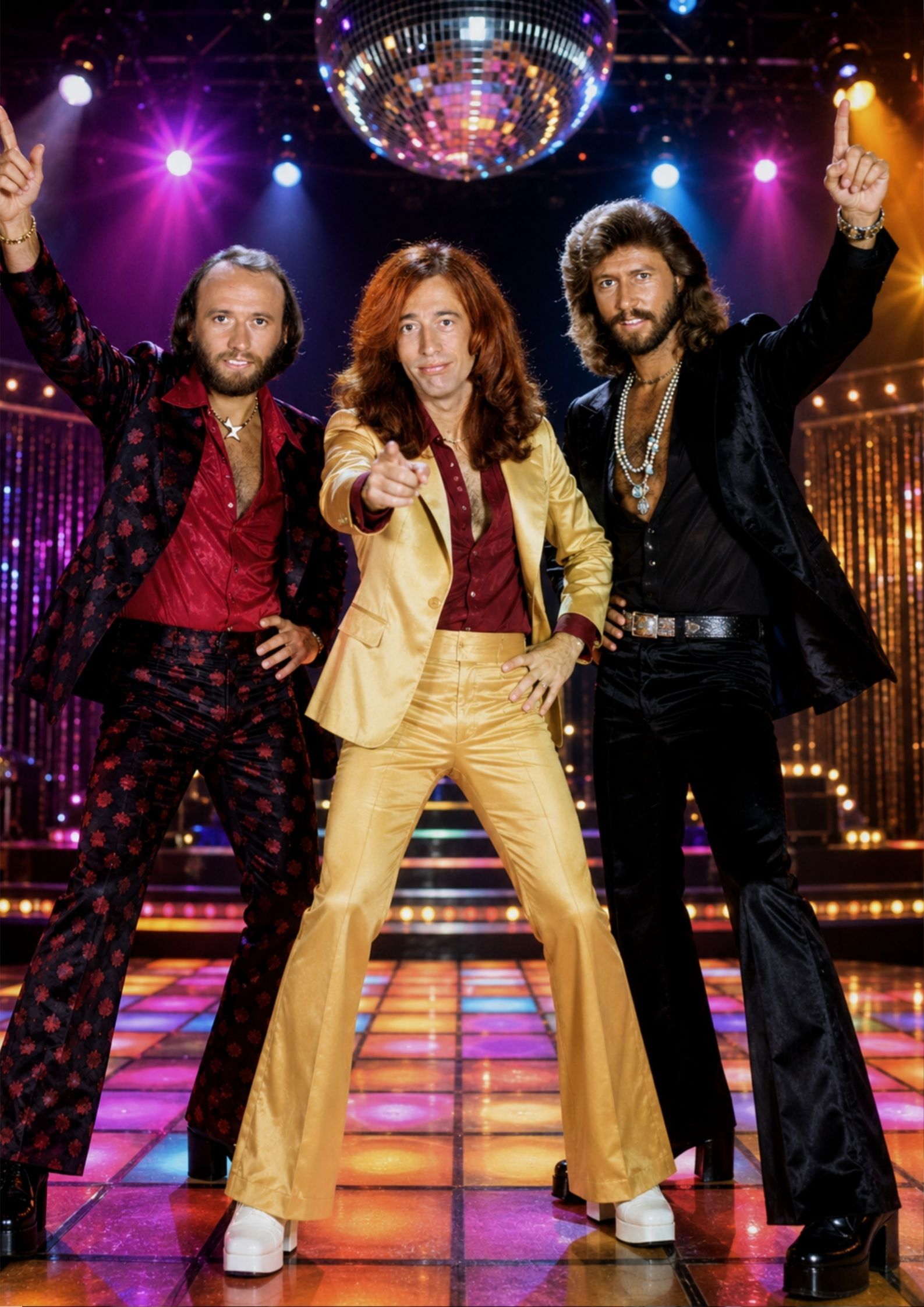
The Bee Gees Didn’t Just Define Disco — They Built the Soundtrack of an Entire Generation
When people speak of the Bee Gees, they often begin with the falsetto harmonies, the white suits, the pulsing dance floors, and the unforgettable glow of Saturday Night Fever. But the true story of Barry, Robin, and Maurice Gibb reaches far deeper than disco. These three brothers were not merely performers riding a musical trend. They were songwriters, arrangers, producers, survivors, and emotional craftsmen who helped reshape popular music across several decades. Their sound did not simply belong to the late 1970s. It became part of the memory of an entire generation.
Long before the world knew them as the architects of the disco era, the Bee Gees were boys singing between movie shows in Manchester in the 1950s. That detail matters because it reminds us that their success was not accidental or overnight. Their gift was forged early, through family harmony, instinct, and a shared musical language only siblings can fully understand. After moving to Australia and later returning to England in the 1960s, the Gibb brothers began building a catalog that revealed their depth well before disco ever arrived.
Their early recordings, including “Massachusetts,” “I’ve Gotta Get a Message to You,” and “I Started a Joke,” showed a group drawn to drama, melancholy, and emotional storytelling. These were not lightweight pop songs. They carried loneliness, regret, longing, and a theatrical sadness that made listeners compare them with the great songwriting groups of the era. Even then, the Bee Gees had a rare ability to make sorrow sound beautiful.
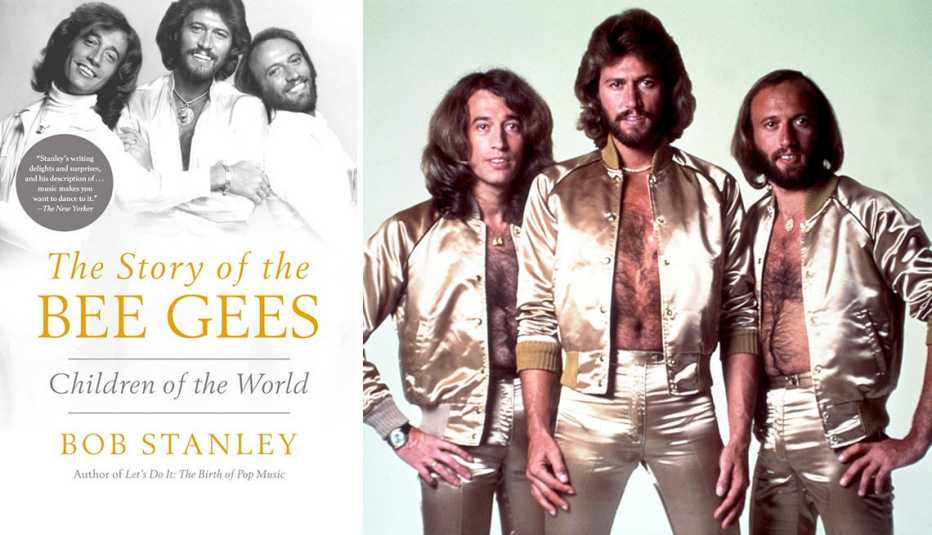
But like many great artists, their path was not smooth. After the ambitious album Odessa, tensions and disappointment briefly pulled the group apart. They reunited in 1970 and found renewed success with “Lonely Days” and “How Can You Mend a Broken Heart,” yet the mid-1970s brought uncertainty again. For many bands, that period might have marked the beginning of the end. For the Bee Gees, it became the doorway to reinvention.
The turning point came with Main Course in 1975. Recorded with a new sense of rhythm, groove, and possibility, the album introduced the sound that would change their career forever. Barry Gibb’s falsetto emerged as a defining instrument — not a gimmick, but a thrilling new emotional color. Songs like “Jive Talkin’” and “Nights on Broadway” revealed a group willing to abandon old expectations and trust their instincts in a changing musical world.
That courage led directly to the phenomenon of Saturday Night Fever. The soundtrack did not simply support a film. It helped define an era. With “Stayin’ Alive,” “Night Fever,” “How Deep Is Your Love,” “More Than a Woman,” and other unforgettable songs, the Bee Gees created music that captured movement, ambition, heartbreak, and urban energy all at once. The record became one of the best-selling albums in history, and for a time, their sound seemed to exist everywhere.
For older music fans, it is difficult to overstate what that moment felt like. Disco was not merely a beat. It was nightlife, escape, fashion, youth, heartbreak, aspiration, and release. And no group gave that era its emotional center more completely than the Bee Gees. Their harmonies floated above the rhythm with an almost ghostly beauty, making even dance songs feel touched by sadness.
Their achievement was also historic. In 1977, they became the first and only songwriters to place five songs in the Top Ten at the same time. Across Saturday Night Fever and Spirits Having Flown, they produced an astonishing string of number-one hits, confirming that they were not simply popular. They were dominant in a way few groups have ever been.
Yet their influence did not end with their own recordings. Barry, Robin, and Maurice Gibb wrote and produced major songs for artists including Barbra Streisand, Diana Ross, Dolly Parton, Kenny Rogers, and Frankie Valli. This proves something essential about their legacy: they were not just voices. They were architects of sound. They understood how to write melodies that could live inside different singers, different eras, and different emotional worlds.
Their induction into the Rock and Roll Hall of Fame in 1997 confirmed what many listeners had known for years. The Bee Gees had earned their place not only as disco icons, but as one of the most successful and versatile vocal groups in rock and pop history. The release of One Night Only in 1998 reminded audiences of the breadth of their catalog and sparked renewed appreciation for songs that had never truly disappeared.
The later loss of Maurice Gibb in 2003 brought a heartbreaking end to the Bee Gees as fans had known them. After his passing, Robin and Barry chose not to continue performing under the group’s name, a decision that reflected the deep brotherhood at the core of their music. The Bee Gees were never simply a brand. They were a family harmony, and when one voice was gone, the sound could never be the same.
That is why Robin Gibb’s death in 2012 struck so many fans with such force. It felt like another chapter closing in a story that had shaped millions of lives. Still, the music remains. It remains in the opening pulse of “Stayin’ Alive,” the ache of “How Can You Mend a Broken Heart,” the haunted beauty of “I Started a Joke,” and the sweeping grace of “How Deep Is Your Love.”
In the end, the Bee Gees defined disco, but they were never confined by it. They gave the world songs for dancing, grieving, remembering, and surviving. Their legacy is not only measured in album sales or chart records, but in the strange and beautiful way three brothers could blend their voices and make an entire generation feel alive.