Introduction
THE PERFORMANCE THE WORLD WANTED TO BE TRUE: Barry Gibb, His Sons, and the Legacy Hidden Inside “Massachusetts”
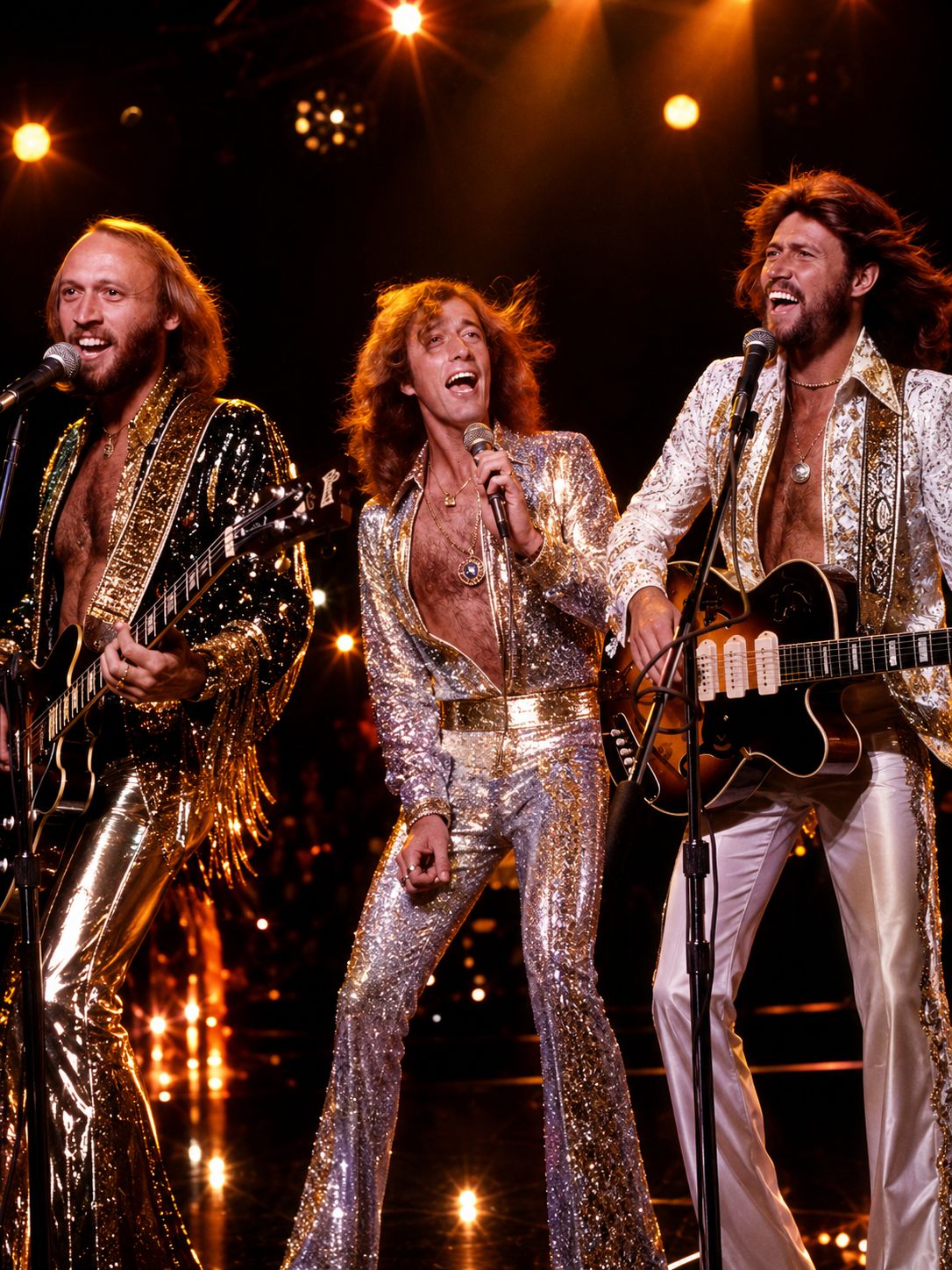
A deeply emotional story has been circulating among Bee Gees fans: Barry Gibb supposedly walked onto a stage with his sons Stephen and Ashley Gibb, began singing “Massachusetts,” and then paused to speak about Robin, Maurice, family, and the responsibility of carrying the Bee Gees’ music into another generation. According to the dramatic accounts, the audience was moved to tears as a father and his sons transformed one of the group’s earliest masterpieces into a living family tribute.
It is a beautiful image. It is also an event that has not been reliably verified.
Versions of the claim have appeared on social-media pages using nearly identical headlines, but they provide no confirmed venue, date, complete recording, official announcement, or independent reporting. The available official histories document several genuine collaborations between Barry and members of his family, yet they do not confirm this particular performance of “Massachusetts” with both Stephen and Ashley.
That distinction matters because the real Gibb family story is already powerful enough. It does not need an invented concert to become moving. Barry has genuinely worked with his sons, invited family members into his musical world, and spoken openly about the enormous place his late brothers continue to occupy within everything he creates.
Stephen, Barry’s eldest son, is an experienced guitarist and singer who joined his father during the Mythology Tour. Maurice Gibb’s daughter Samantha also appeared in the touring band, allowing Barry to look across the stage and see the next generation of his family helping him preserve music originally created with Robin and Maurice. Barry described the experience as a thrill, praising both Stephen and Samantha for their musicianship.

Documented performances from that period include Barry and Stephen singing “Grease” together, as well as appearances featuring Stephen on Bee Gees material. During the 2014 tour, Stephen and Samantha—not Stephen and Ashley—were the family members most visibly associated with Barry’s live celebration of the Gibb brothers’ catalogue.
Ashley’s connection to his father’s work is no less meaningful, although it has often taken place away from the concert spotlight. Stephen and Ashley co-wrote Barry’s 2016 solo album In the Now, with Barry’s official website proudly presenting the three men as collaborators. The album became a bridge between Barry’s memories of his brothers and the creative energy offered by his sons.
That real collaboration explains why the fictional or unverified “Massachusetts” performance feels so believable. Barry has already passed musical ideas, family stories, and songwriting traditions to his children. Stephen and Ashley have helped him continue creating after the deaths of Robin and Maurice. The emotional truth exists, even though the specific viral scene remains unsupported.
Of all the songs that could have been chosen for such a story, “Massachusetts” is especially significant.
Written by Barry, Robin, and Maurice Gibb, the song became the Bee Gees’ first British number-one single. The brothers originally hoped to offer it to the Seekers, but when that plan did not happen, they recorded it themselves. Remarkably, none of them had visited Massachusetts when they wrote it; they were attracted to the unusual musical sound of the name.
The song tells of someone who has traveled toward a promised new life but finds himself looking back toward home. Its quiet emotional center is not adventure but return—the moment when distance teaches a person what truly mattered.
That theme now seems inseparable from the history of the Bee Gees.
The brothers spent their careers traveling across continents, musical styles, periods of extraordinary success, and seasons of public rejection. They were repeatedly required to reinvent themselves, yet their deepest identity remained rooted in the sound they had discovered together as children. No matter how far the music traveled, it always returned to three related voices finding the same breath.
Robin Gibb sang the defining lead vocal on “Massachusetts.” His delicate, unmistakable delivery gave the song its mixture of homesickness and quiet wonder. It became a regular feature of Bee Gees concerts and one of the recordings most closely connected with Robin’s voice. During Barry’s 2014 shows, the song appeared through video as part of the evening’s remembrance, rather than as a verified performance with Barry and two sons.

The collaboration on In the Now demonstrated this beautifully. Barry described the album through his journey with and without his brothers, with and without his parents, and through watching his children build families of their own. His sons brought new energy to the writing process while allowing him to continue reflecting upon the people who had shaped his life.
There is something profoundly moving in the image of a legendary songwriter no longer creating only with the brothers of his childhood but with the sons of his later life. One musical circle has been broken, yet another has formed around it.
Stephen’s playing carries the confidence of someone who grew up close to an extraordinary musical history but developed his own identity. Ashley’s songwriting partnership with Barry reveals a quieter form of inheritance: the patient work of finding an idea, testing a line, and shaping emotion into melody.
Together, these relationships show that the Gibb legacy is larger than performance. It exists in writing rooms, family conversations, home recordings, rehearsals, and the knowledge passed from one generation to another.
The viral story also reveals how strongly audiences desire a moment of resolution. Fans want to see Barry surrounded by family. They want him to sing Robin’s song and tell the crowd that nothing created by the brothers will ever be forgotten. They want the children to stand beside the father, proving that loss did not have the final word.
Such hopes are understandable, but honoring the Bee Gees requires us to distinguish emotional possibility from documented history. An invented quotation may produce immediate tears, yet the real story offers something deeper: Barry has consistently acknowledged that his achievements belong partly to Robin and Maurice.
When receiving major recognition, he publicly stated that his brothers were responsible for the honor as much as he was. He understood that the “magic” associated with the Bee Gees had never been his possession alone.
This generosity is central to Barry’s later legacy. He could have presented himself simply as the final authority over the group. Instead, he repeatedly returned attention to the brothers who helped create the songs, harmonies, and identity that changed his life.
The Bee Gees were never one voice with two supporting figures. They were a difficult, brilliant, sometimes divided family whose greatest music emerged when three strong personalities found a shared emotional language.
“Massachusetts” captures that miracle in miniature. Barry, Robin, and Maurice wrote it together. Robin delivered its unforgettable lead. The brothers surrounded the melody with harmonies that made homesickness feel universal.
Decades later, the song no longer points only toward a distant American state. It points toward childhood, family, and the home that exists inside memory after the people who created it are gone.
Perhaps one day Barry, Stephen, and Ashley will stand together and perform it publicly. Perhaps an authenticated recording already exists privately but has never been released. Based on the reliable information currently available, however, the widely circulated story should be treated as an unverified tribute narrative, not as confirmed concert history.
Yet the story became popular for a reason.
It expresses something fans recognize as emotionally true: Barry does not carry the Bee Gees’ legacy alone. Robin and Maurice remain inside the songs, while Stephen, Ashley, Samantha, and other members of the Gibb family help ensure that the music continues moving forward.
The imagined performance ends with an audience in tears. The real story ends more quietly, but with greater dignity.
A father keeps writing with his sons.
A son plays guitar beside his father.
A family protects the songs left by absent brothers.
And whenever “Massachusetts” begins, the lights do not simply go out somewhere in the distance. They rise again upon three young brothers who once wrote about a place they had never seen—and somehow created a song that would always sound like coming home.