Introduction
The Day Graceland Fell Silent: Why Elvis Presley’s Voice Still Moves the World
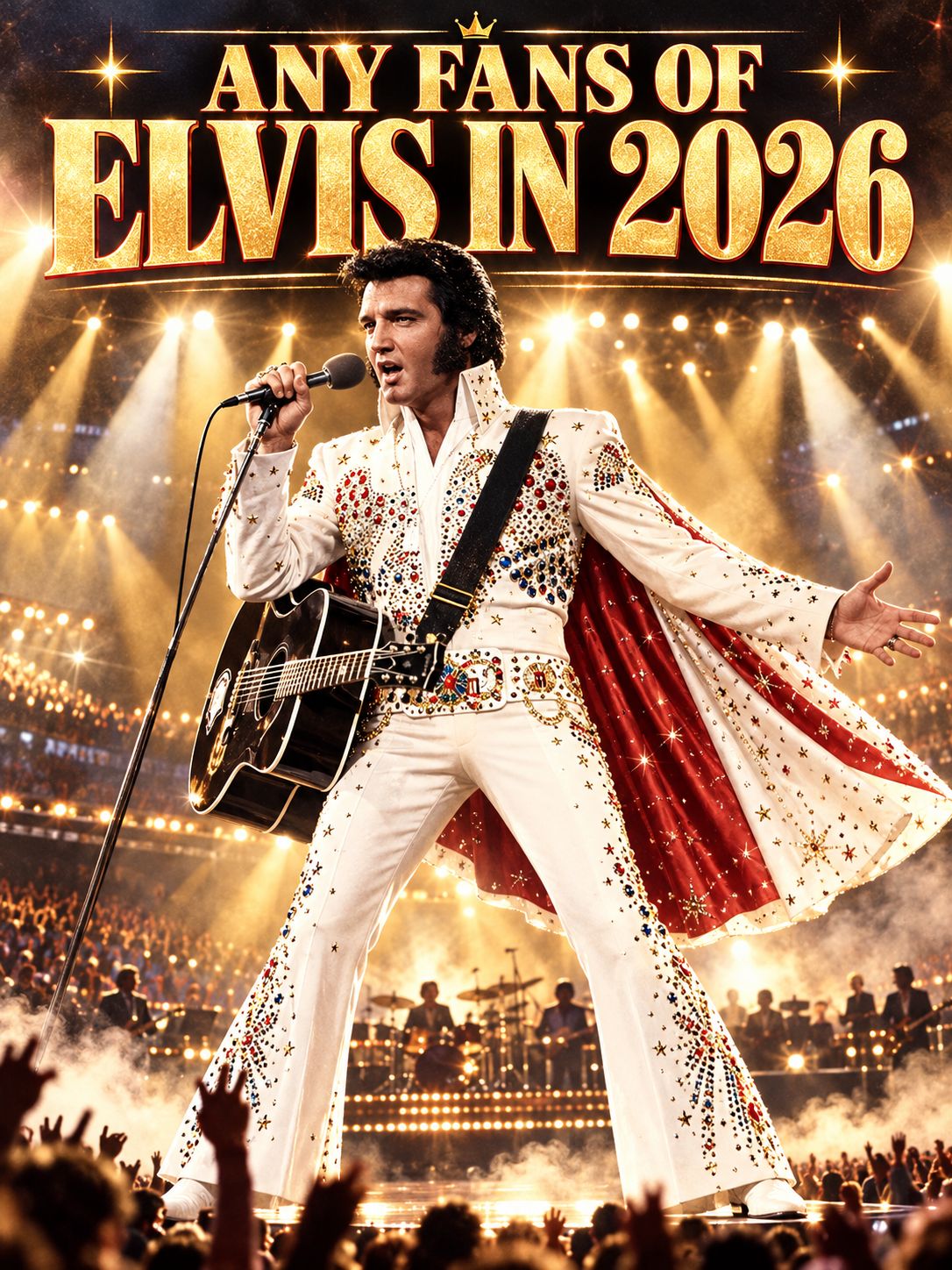
On August 16, 1977, Elvis Presley died at his beloved Graceland home in Memphis, Tennessee. He was 42 years old. For the people who had grown up with his records, watched him on television, or seen him command a stage, the news was difficult to reconcile with the performer they knew. Elvis had seemed larger than life. Suddenly, the voice that had filled living rooms and concert halls belonged to a man whose life had ended far too soon.
The story of Elvis often begins with a familiar image: a young singer moving to a rhythm that made the country stop and stare. Yet his lasting influence cannot be explained by charisma alone. He brought together sounds he had heard around him in the American South, including gospel, blues, rhythm and blues, and country music. His early recordings carried the excitement of someone discovering what those traditions could become in his own voice. Listeners heard energy, vulnerability, and an unmistakable desire to sing.
That voice could take a song in more than one direction. In “That’s All Right,” Elvis sounded restless and delighted, as though the music might outrun him at any moment. In “Heartbreak Hotel,” he made loneliness feel stark and immediate. Years later, “If I Can Dream” gave him room to sing with conviction about hope at a troubled time. And in quieter performances, including his gospel recordings, he revealed a tenderness that could be missed by anyone who knew him only from the spectacle of his concerts.
His career also shows how much a performance can change when the person delivering it grows older. The young Elvis of the 1950s seemed to challenge every expectation placed on a popular singer. The Elvis of the 1968 television special appeared more seasoned, sitting close to other musicians and drawing strength from the simple act of singing together. In his later concert years, the elaborate costumes and grand arrangements drew attention, but the most affecting moments often came when his voice cut through everything around it. A familiar lyric, sung with unusual weight, could make an audience hear the song anew.

To remember Elvis thoughtfully is to see both the extraordinary career and the human life within it. Fame gave him opportunities that few performers had known, while also placing much of his life under constant scrutiny. He made recordings and films, carried enormous expectations, and remained a person with ties to family, home, and the music that had shaped him. Graceland was part of that life: a home in Memphis as well as the place where admirers would later gather to remember him.
His influence reached far beyond any one genre. Rock musicians learned from his sense of rhythm and his willingness to make a song physically expressive. Country singers recognized the storytelling in his ballads and the southern roots in his style. Gospel remained a vital part of his musical identity. These connections help explain why people with very different tastes can each hear something meaningful in an Elvis Presley recording.
For older listeners, his songs may bring back the moment they first heard them: a radio playing in the kitchen, a record shared with friends, a performance watched with family. Younger listeners encounter him through a different doorway, often knowing the image before they know the voice. The recordings reward a closer listen. Beneath the legend is a singer who could sound exuberant, uncertain, grateful, and deeply moved, sometimes within the space of a single song.
No remembrance can fully measure Elvis Presley’s cultural impact. His work changed popular music, and the arguments about his place in its history continue. But the reason people return to him may be simpler. They hear a voice that still communicates across the years. Nearly half a century after that August day in 1977, the music remains vivid enough to invite another listen. That is a remarkable legacy for the man so many came to call the King of Rock ’n’ Roll.