Introduction
THE NINE-PAGE DNA REPORT THAT CLAIMED TO REWRITE ELVIS HISTORY—UNTIL THE PAPER TRAIL DISAPPEARED
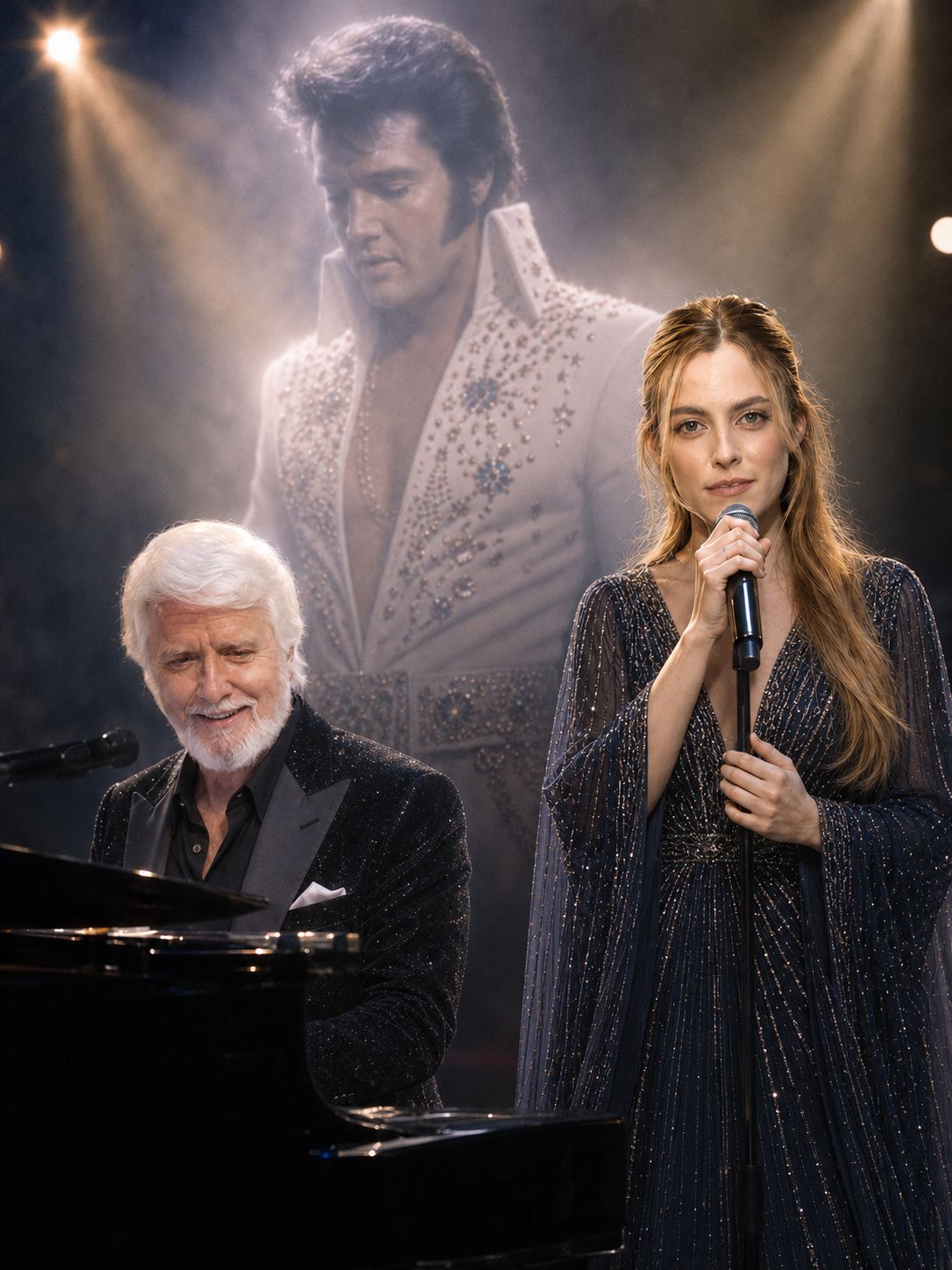
There are moments in history when a single document changes everything. A signed order can end a career, a medical result can divide a family, and a laboratory report can force the public to reconsider what it believed was settled forever. That is the dramatic promise behind a story now circulating under the words “DO SOMETHING BEFORE YOUR PEOPLE. Before the world. Show yourself.” It describes nine double-spaced pages, an official-looking case number, a mysterious Memphis delivery, and an alleged DNA finding so extraordinary that four law firms supposedly mobilized before sunset.
According to the narrative, the document arrived on November 14, 2024, bearing the letterhead Genomic Diagnostics International and the case number GDM A-2024-1887. Its conclusion was presented with scientific certainty: biological material recovered during an archival project at Graceland allegedly produced a 99.97 percent match consistent with Elvis Aaron Presley—not a relative, not a descendant, but the same individual. The implication was breathtaking. If the report were genuine, then the most famous death in popular-music history would suddenly become the opening scene of an entirely different story.
But precision is not the same as proof.
The case number and laboratory name do not lead to an identifiable official report, court filing, estate notice, government record, or accredited laboratory announcement. The searchable trail instead leads back to social-media content repeating the same cinematic script, complete with ominous music, anonymous sources, and declarations that the findings “could not be disappeared.”
That absence matters because an authentic genetic discovery of this magnitude would require far more than an impressive percentage. Investigators would need a documented chain of custody showing exactly where the material came from, who handled it, how contamination was prevented, what testing method was used, and which authenticated reference profile produced the comparison. The full report would ordinarily identify the responsible laboratory, analysts, methodology, quality controls, statistical interpretation, and legal authority under which the sample was examined.
None of those essential details appears in the circulating story.
The official historical record remains clear. Elvis Presley Enterprises states that Elvis Presley died at Graceland on August 16, 1977, at the age of 42. The National Archives also holds a federal death record identifying Elvis Presley as born in 1935 and deceased in 1977.
To overturn that record, an online narrator would need evidence strong enough to survive independent scientific review, legal scrutiny, and authentication by multiple qualified institutions. A dramatic voice-over cannot perform that work.
The story’s description of a federal genetic database creates another serious problem. It claims that once the unidentified material entered a private laboratory, copies of the findings were automatically logged into a federal system under “standard protocol,” preventing the estate from suppressing them. That is not how the FBI describes the National DNA Index System.
The FBI explains that CODIS and NDIS support criminal-justice DNA databases containing profiles contributed by participating federal, state, and local forensic laboratories. The permitted categories include profiles connected to offenders, arrestees, forensic casework, missing persons, unidentified remains, and relatives participating in missing-person investigations. Access is tightly restricted, and laboratories submitting records must meet specific legal, accreditation, auditing, and quality-assurance requirements. A sample sent by a documentary genealogist does not automatically enter NDIS merely because a laboratory tested it.
Even the accreditation language is crafted to sound authoritative while remaining strangely vague. The narrative says the laboratory possessed accreditation from the American Society of Crime Laboratory Directors. The FBI’s current guidance identifies A2LA and ANAB as approved accrediting bodies and notes that the former ASCLD/LAB organization is now part of ANAB. A legitimate report would name the precise accrediting entity, accreditation number, scope, and expiration information—not simply invoke a respected scientific organization as a dramatic seal of approval.

The legal timeline is equally questionable. The story says Tennessee changed its genetic-privacy laws in 2022, supposedly opening a narrow pathway that allowed the Graceland material to be tested and federally recorded. Tennessee’s Genetic Information Privacy Act, however, was enacted in 2023 and took effect on July 1 of that year. The legislation concerns the collection, use, disclosure, and protection of consumer genetic information; it does not establish the automatic federal-upload mechanism described in the viral account.
Then there is Bob Joyce, the man placed at the center of the supposed revelation. For years, internet communities have compared his appearance and singing voice with Elvis Presley’s, constructing elaborate theories around selective photographs, performances, and perceived similarities. In the new narrative, Joyce is said to have received legal notification on November 16 and responded through an unnamed attorney with a carefully worded request for privacy.
Yet no attorney is identified. No letter is produced. No signed statement is shown. No laboratory representative appears. No executor confirms receiving the report. Every crucial witness remains hidden behind phrases such as “sources close to the situation.”
This is how a modern legend dresses itself as an investigation. It supplies exact dates, numbered files, legal terminology, scientific percentages, and silent lawyers. Each detail gives the audience the sensation of evidence while protecting the story from verification. The listener is repeatedly told that powerful people are attempting to suppress the truth, so the absence of proof becomes part of the supposed proof.
The most revealing question is therefore not whether the alleged report proves Bob Joyce is Elvis Presley. It does not. The real question is why the story feels convincing before a single authenticated page has been shown.
Elvis remains uniquely vulnerable to such mythology because his cultural presence never faded after his death. His voice remained on the radio, his image remained on screens, and Graceland became a place where personal memory and public history seemed to meet. For admirers who never emotionally accepted his absence, the possibility of survival can feel more comforting than the finality of 1977.
But respect for Elvis requires more than believing the most thrilling account.
It requires distinguishing evidence from performance.
Until the complete laboratory report is produced, independently authenticated, supported by a documented chain of custody, and confirmed by accountable experts, GDM A-2024-1887 is not the document that rewrote music history. It is the centerpiece of a highly polished internet story.
The nine pages may sound powerful.
The missing proof is more powerful still.