Introduction
THE DOCUMENT THAT SHOOK GRACELAND: What Lisa Marie Presley’s Final Trust Decision Really Meant for Riley Keough and Priscilla Presley
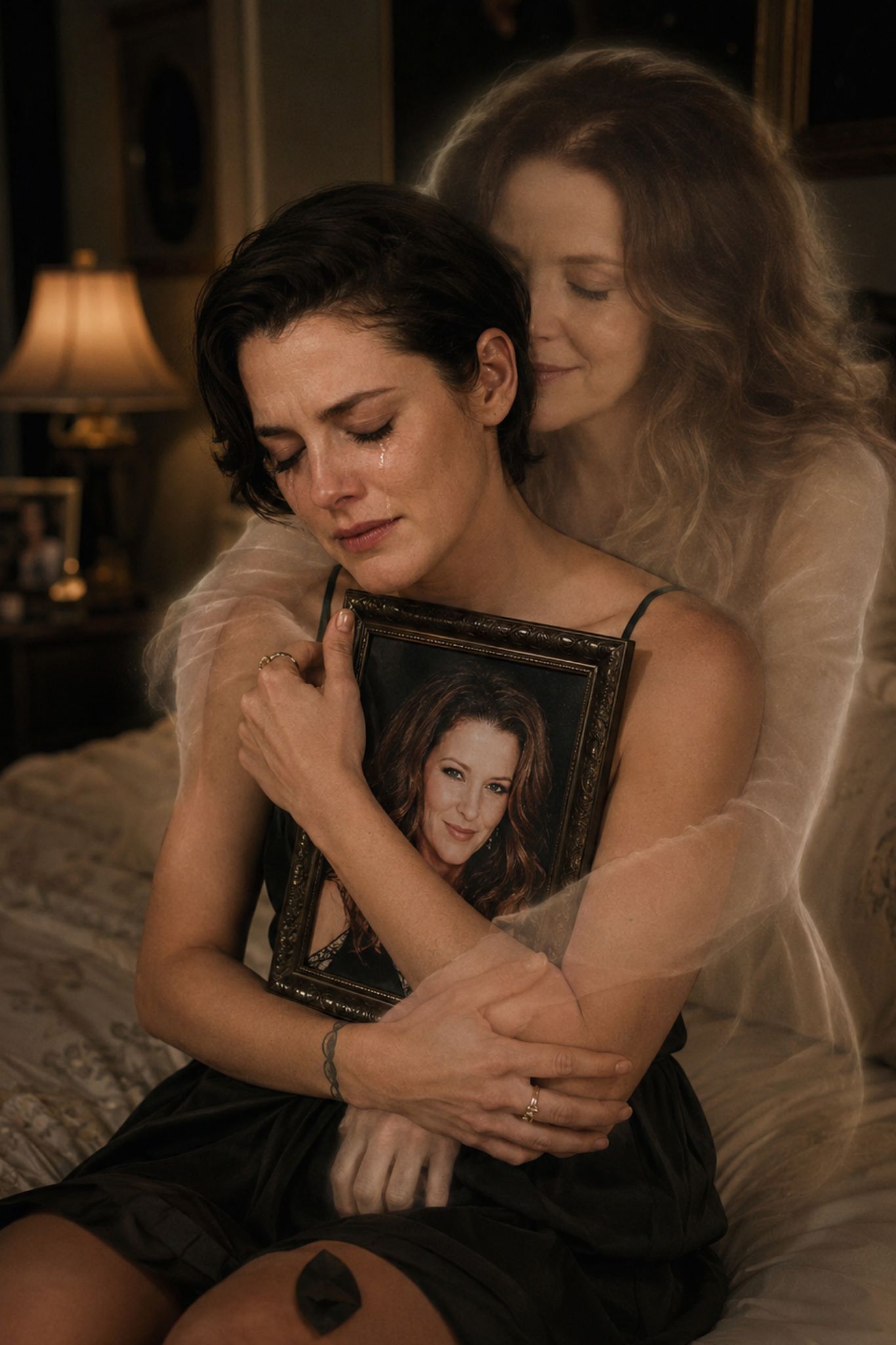
Some family stories are told through interviews, memoirs, and carefully chosen public statements. Others emerge through legal documents whose restrained language conceals enormous emotional consequences. In the Presley family, where private decisions have been examined publicly for generations, a single amendment signed years before Lisa Marie Presley’s death became the center of an extraordinary struggle over trust, responsibility, and the future of one of music history’s most valuable legacies.
When Lisa Marie died on January 12, 2023, attention immediately turned toward her children, her mother, and the complicated structure governing her estate. Lisa Marie had been Elvis Presley’s only child and the person through whom ownership of Graceland had passed to the next generation. Her death therefore created more than an ordinary question of inheritance. It raised the deeply personal issue of who would be entrusted to protect her wishes, represent her surviving daughters, and preserve a family home carrying nearly half a century of cultural history.
At the center of the dispute was a document dated March 11, 2016, presented as an amendment to Lisa Marie’s living trust. The amendment removed Priscilla Presley and Lisa Marie’s former business manager, Barry Siegel, as successor co-trustees. In their place, it named Lisa Marie’s two eldest children, Riley Keough and Benjamin Keough. After Benjamin’s death in 2020, Riley would effectively become the remaining successor trustee under the disputed amendment.
That fact alone was powerful enough to generate dramatic headlines. An adult daughter had apparently decided that control of her trust should pass directly to her children rather than remain with her mother and former business representative. To many observers, the change looked like a decisive statement about generational authority. Lisa Marie appeared to be placing the future of her family legacy in the hands of those who would inherit it rather than those who had administered earlier chapters of it.
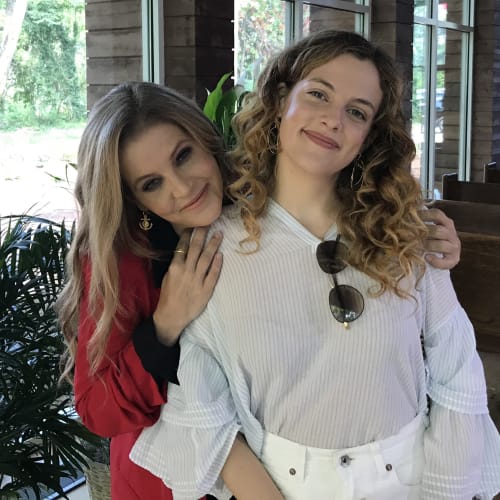
However, the document cannot responsibly be described as a proven declaration of war against Priscilla. No court established that Lisa Marie amended her trust because she regarded her mother as dangerous, exploitative, or unworthy. No judicial finding concluded that the document had been deliberately designed to punish Priscilla. Those interpretations belong to online commentary, not to the verified legal record.
The actual dispute concerned the document’s authenticity and validity. In a petition filed shortly after Lisa Marie’s death, Priscilla questioned why the amendment had not been delivered to her during Lisa Marie’s lifetime, challenged the appearance of Lisa Marie’s signature, noted that Priscilla’s name was misspelled, and argued that the document had not been properly witnessed or notarized. This directly contradicts viral accounts claiming the amendment was carefully witnessed and notarized to make it immune from challenge.
Priscilla’s filing did not produce a final trial determining whether those objections were correct. Instead, the parties reached a settlement in May 2023, avoiding a prolonged public contest over the trust. Riley later asked the court to approve the agreement, and a judge formally confirmed her position as sole trustee in August. Additional financial provisions were approved later that year.
The settlement placed Riley Keough in control of Lisa Marie Presley’s trust and the sub-trusts established for her younger sisters, Harper and Finley. Priscilla received a financial settlement and a paid, nonfiduciary role as special adviser connected to the trust. The agreement therefore did not remove Priscilla from every relationship with the Presley legacy. Instead, it separated advisory involvement from legal control, leaving final trustee authority with Riley.
That distinction changes the emotional meaning of the story. Riley did not publicly announce a campaign against her grandmother, nor did she frame the settlement as a personal victory over Priscilla. She assumed a legal responsibility that her mother’s disputed amendment had apparently intended her to hold, while also accepting an agreement that preserved a formal place for Priscilla. Riley later emphasized family unity and presented her primary responsibility as protecting Graceland and the Presley family legacy, not continuing a public conflict.

For Riley, the legal proceedings arrived during an almost unimaginable period of grief. She had already lost her brother Benjamin, and then she lost the mother whose story she would later help complete in the memoir From Here to the Great Unknown. At the same time, she was required to confront documents, legal petitions, financial obligations, and questions about the future of a landmark visited by admirers from around the world.
This is where the story becomes larger than celebrity inheritance. Riley Keough was not simply receiving property. She was accepting custody of a place where her grandfather had lived, where her mother had spent part of her childhood, and where several members of her family were laid to rest. Graceland was simultaneously a home, a memorial, a public institution, and the physical center of the Elvis Presley story.
The responsibility carried historical weight as well. After Elvis died in 1977, Priscilla played an important role in the business decisions that helped open Graceland to the public and transform the financially strained estate into a successful cultural destination. Any fair account of the later trust dispute must acknowledge that contribution. Portraying Priscilla only as an outsider attempting to seize control ignores her documented role in preserving Graceland during an earlier period of uncertainty.
Lisa Marie, however, was no longer a child whose inheritance required older trustees to manage it. By 2016, she was an adult mother making decisions about what would happen when she could no longer act for herself. Naming Riley and Benjamin could therefore be interpreted not as an attack, but as a natural transition from one generation to another. A mother may choose her adult children as trustees because she believes they are closest to the beneficiaries and most directly invested in the family’s future.
The truth is that the public does not know every conversation that preceded the amendment. We do not know exactly what Lisa Marie was thinking when she signed it, whether the change resulted from a specific disagreement, or whether it simply reflected a desire to place authority with her children. The document shows what the amendment purported to change, but it cannot explain every emotion behind that decision.


This uncertainty has not prevented sensational narratives from turning the case into a story of betrayal. Phrases such as “declaration of war,” “final revenge,” and “Riley’s devastating silence” may attract attention, but they assign motives that the legal record never established. They also flatten three complicated women into opposing characters when their family relationships contained grief, loyalty, disagreement, shared memories, and mutual responsibility.
Priscilla’s challenge should likewise be described accurately. She disputed the technical validity of an amendment that changed her legal status. Filing that petition did not by itself prove that she intended to disregard her daughter’s wishes, just as the amendment did not prove that Lisa Marie wanted her mother permanently excluded from family life. Legal disputes often require parties to state opposing positions in severe language, but a courtroom claim is not automatically a complete description of a relationship.
The most revealing outcome may be the settlement itself. Riley became sole trustee, fulfilling the central effect of the 2016 amendment, while Priscilla retained an advisory connection and received agreed financial terms. Both sides avoided a trial that could have exposed further private details and deepened divisions during a period of mourning. Rather than proving that one woman defeated another, the agreement suggests that the family chose a workable conclusion over an endless public battle.

Riley’s later conduct has reinforced that interpretation. As custodian of Graceland, she has spoken about preserving the property as her family’s home and maintaining the legacy inherited through Elvis and Lisa Marie. Her role is not merely commercial. She must balance public devotion to Elvis with the privacy and interests of Lisa Marie’s surviving children.
That mission places Riley in a position once occupied, in different forms, by both her mother and grandmother. Priscilla helped rescue and develop Graceland during an earlier generation. Lisa Marie inherited the home and kept it outside the major business interests she sold in 2005. Riley now carries the responsibility forward, protecting both the physical property and the emotional meaning attached to it.
The 2016 amendment therefore represents more than a family disagreement. It marks a transfer of generational responsibility. It moved legal authority away from the generation that had protected Elvis’s estate after his death and toward the grandchildren who would inherit the consequences of every future decision.
There is tragedy in the fact that Lisa Marie did not live to explain the document publicly. There is also tragedy in the speed with which legal questions emerged after her death. Yet the final resolution should not be remembered solely as warfare inside the Presley family.
It should be understood as the difficult process through which Riley Keough became responsible for protecting what remained.
The document did not reveal every secret inside Graceland. It did not prove hatred, betrayal, or revenge. What it did reveal was Lisa Marie Presley’s apparent decision that the next chapter of her family’s legacy should be guided by her children. After grief, legal uncertainty, and months of public speculation, that is largely what occurred.
Riley Keough became the trustee. Priscilla Presley remained part of the legacy. And Graceland passed into the care of another generation.