Introduction
THE VOICE FROM ARKANSAS: Why an Elvis Mystery Refuses to Die Nearly Fifty Years Later
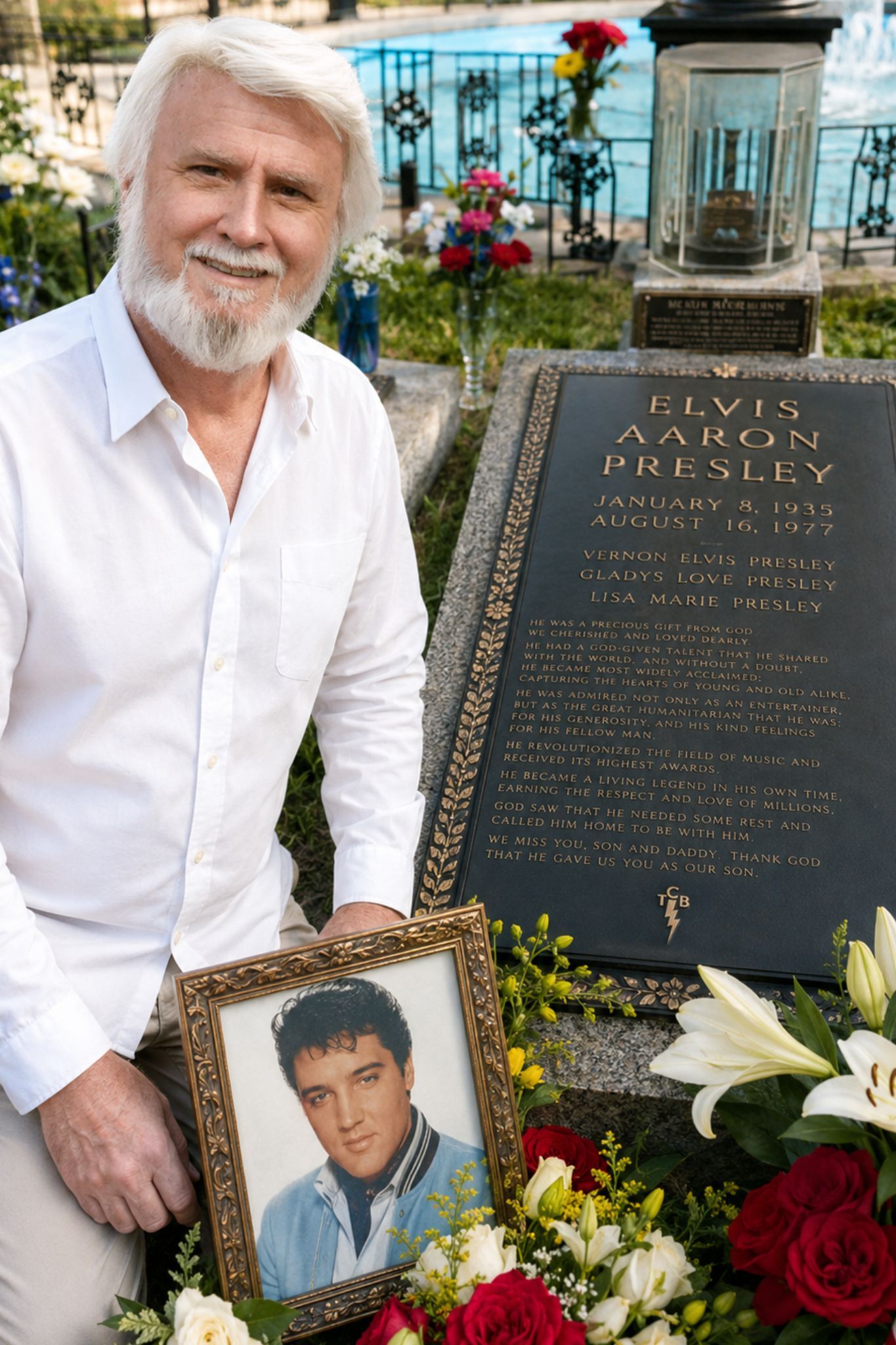
Nearly half a century after Elvis Presley died at Graceland, the events of August 16, 1977, still possess an unusual power over the public imagination. The basic facts appear familiar: Elvis was discovered unresponsive inside his Memphis home, transported to Baptist Memorial Hospital and pronounced dead that afternoon. The gates of Graceland became a gathering place for stunned admirers, while radio and television stations struggled to describe the scale of the loss. For millions of people, it felt as though an entire age of American music had ended in a single day.
Yet the passage of time has not brought complete silence to the story. Instead, questions about Elvis’s deteriorating health, his use of prescription medication, the accounts provided by people inside Graceland and the medical conclusions announced after his death have continued to generate discussion. Some of those questions are reasonable matters of historical inquiry. Others have grown into elaborate theories that reach far beyond the available evidence. The challenge is to understand where the documented record ends and where speculation begins.
In the final months of his life, Elvis Presley was clearly struggling. People who saw him perform noticed dramatic changes in his appearance and energy. There were evenings when his voice still rose with astonishing warmth and authority, reminding audiences why he had become one of the most influential performers of the twentieth century. There were also concerts in which he appeared exhausted, physically uncomfortable or unusually distant. The contrast could be painful. The musical gift remained, but the man carrying it seemed increasingly burdened.
His personal physician, Dr. George Nichopoulos, widely known as Dr. Nick, later faced intense scrutiny over the quantity of prescription medication associated with Elvis and his circle. The full medical history was complicated, involving genuine illnesses as well as dependency concerns. It would be misleading to reduce every aspect of his decline to one substance or one person. Nevertheless, it is difficult to examine the final chapter of Elvis’s life without acknowledging that medication, chronic health problems, an exhausting schedule and emotional isolation had become part of a dangerous pattern.
Beyond the medical questions were accounts concerning Elvis’s state of mind. Friends, employees and members of his inner circle later recalled that he sometimes spoke of wanting to leave everything behind. The word “disappear” has appeared in various retellings, although memories recorded years after a traumatic event must always be approached with caution. Wanting to escape an unbearable situation is not the same as developing a secret plan to abandon one’s identity. A weary man may dream of peace without taking practical steps to erase his former life.
Still, the idea of disappearance has become central to one of the most persistent modern theories surrounding Elvis. That theory focuses on Bob Joyce, a Baptist pastor from Benton, Arkansas, whose singing voice has attracted widespread attention online. Recordings of Joyce performing gospel music have led some listeners to hear similarities to Elvis, particularly in the warmth of his lower register, his phrasing and the spiritual intensity of his delivery.
The resemblance can be striking to an emotionally invested listener. Elvis possessed a vocal style shaped by Southern gospel, blues, country music and church singing, and Bob Joyce performs within some of those same traditions. Shared musical roots can naturally produce similarities in pronunciation, phrasing and tone. The human ear also has an extraordinary ability to connect an unfamiliar sound to a famous voice already stored in memory. Once someone is told to listen for Elvis, it becomes difficult not to hear traces of him.
Some online commentators have gone much further. They have compared photographs, searched for gaps in public biographies and presented changes in appearance as evidence of a hidden identity. Such comparisons may appear persuasive when placed inside dramatic videos accompanied by suspenseful music. However, photographs taken at different ages, from different angles and under different lighting conditions are unreliable tools for establishing identity. Facial resemblance alone is not proof, and claims about professional forensic or vocal analysis require publicly available methods, credentials and independently reviewable results before they can be treated as credible evidence.
It is equally important to treat Pastor Bob Joyce as a real individual rather than as a character inside someone else’s mystery. He is a minister, a family man and a member of a community. He has repeatedly been associated with a theory he did not create simply because some listeners believe his voice resembles that of Elvis. Curiosity does not justify turning another person’s private life into a public investigation without strong evidence. Respect for Elvis should not come at the cost of respect for someone else.
The responsible counterargument is straightforward: there is no reliable evidence demonstrating that Bob Joyce is Elvis Presley. Elvis’s death was witnessed, medically documented and mourned by relatives, friends and associates. Constructing a different identity would have required the cooperation and permanent silence of medical workers, family members, law-enforcement officials, funeral personnel, business representatives and numerous people inside the Presley organization. Such an operation would have produced enormous documentary and logistical difficulties, none of which has been established through verifiable evidence.
Why, then, does the theory continue to survive? Part of the answer lies in the emotional force of Elvis’s legacy. For admirers who watched him change popular music, the idea that such a powerful presence could simply vanish at the age of forty-two remains difficult to accept. His death felt abrupt, confusing and somehow inconsistent with the vitality preserved in his recordings. Every newly discovered photograph, disputed recollection or familiar-sounding voice offers a temporary escape from finality.
There is also something profoundly appropriate about the setting chosen by the legend: a quiet Southern church, far from the cameras, where a private man sings gospel music and speaks about faith. Elvis loved gospel music throughout his life. He won major honors for sacred recordings, gathered friends around the piano for spiritual songs and often described his talent as a gift from God. The image of him leaving fame behind to become a preacher therefore satisfies a deep narrative longing. It transforms a painful death into a story of redemption and peace.
But a story can be emotionally satisfying without being historically true. The most meaningful questions surrounding Elvis may not concern whether he escaped Graceland, but why he felt so trapped before his death. How could a man surrounded by employees, relatives, admirers and enormous wealth become so isolated? Why was his physical decline allowed to continue in public? Why did the people who loved him find it so difficult to interrupt the machinery that depended on him?
The enduring mystery of August 16, 1977, is not proof that Elvis became another man. It is evidence that the public has never fully reconciled the dazzling legend with the vulnerable person underneath it. Bob Joyce’s voice may remind listeners of Elvis, but resemblance is not identity. The safer and more honest conclusion is that one extraordinary voice has awakened memories of another—and those memories reveal how deeply Elvis Presley still lives within American music.
The real investigation should therefore lead us away from sensational claims and back toward the human tragedy at Graceland. Elvis did not need to survive in secret for his presence to endure. He survives openly every time a gospel harmony rises, every time a country singer bends a phrase with Southern grace and every time an audience hears that unmistakable voice and remembers a man who changed music forever.