Introduction
THE DNA QUESTION THAT NEVER QUITE LEFT GRACELAND: ONE EXTRAORDINARY CLAIM, ONE TEST THAT NEVER SETTLED IT, AND THE PRESLEY MYSTERY THAT REFUSES TO DIE
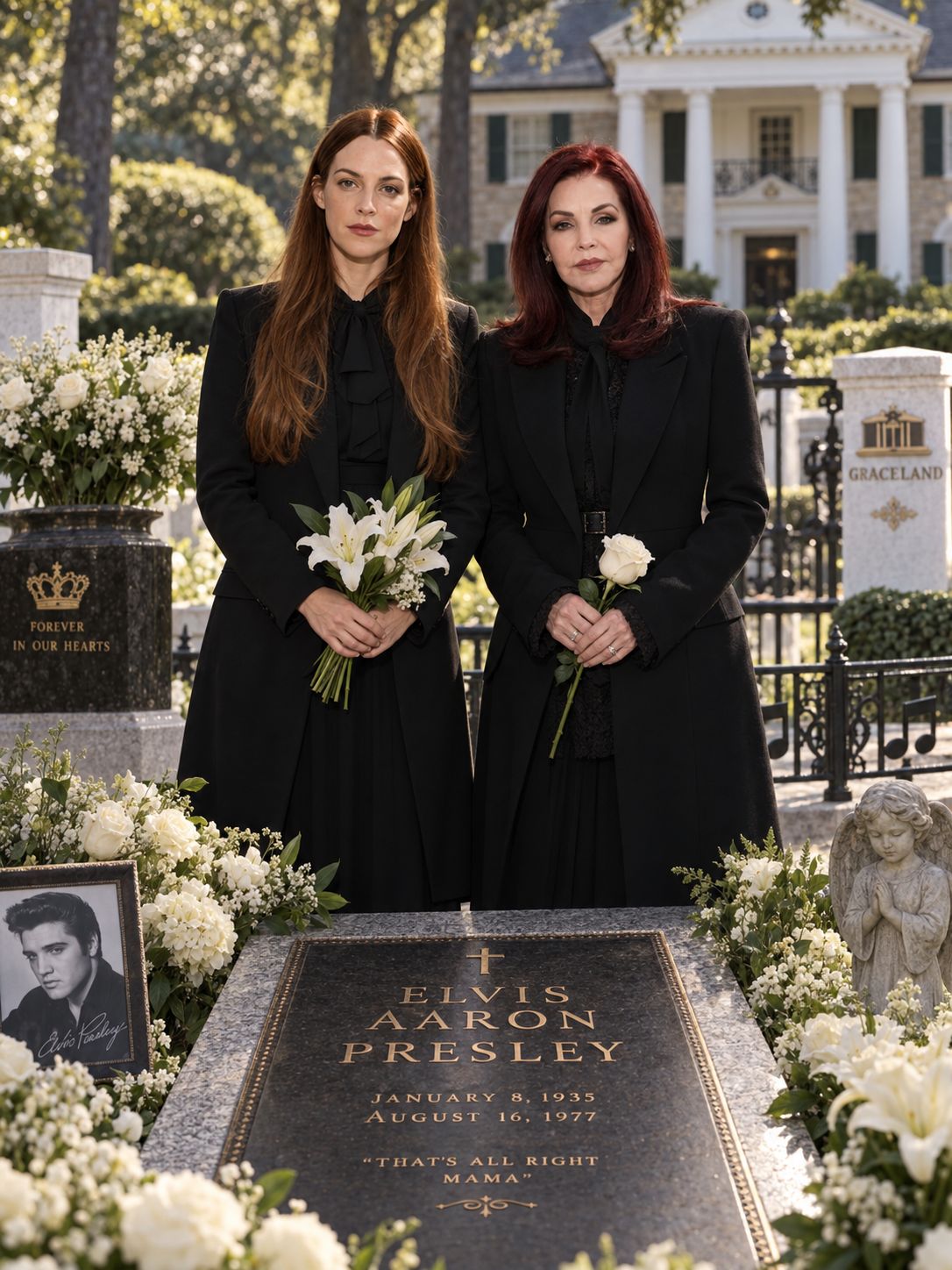
For nearly half a century, Graceland has stood as more than the former home of Elvis Presley. It has become a place where history, grief, celebrity, and family memory meet beneath the same roof. The official Presley story appears straightforward: Elvis died at Graceland on August 16, 1977, and his daughter Lisa Marie Presley became the central heir to his personal and family legacy. Graceland’s own historical account identifies Lisa Marie as Elvis Presley’s only child, and his estate ultimately passed to her after the deaths of the other original beneficiaries named in his will. Yet around legendary figures, official history rarely prevents alternative stories from emerging.
Over the decades, several people have made claims suggesting that the Presley family tree might be more complicated than the public record shows. Some disappeared almost as quickly as they appeared. Others reached newspapers and courtrooms. One of the strangest came from a Swedish woman known as Lisa Johansen, who made an extraordinary assertion: she claimed that she—not the woman the world knew as Lisa Marie Presley—was actually Elvis Presley’s true daughter. Her story eventually reached a federal courtroom in Tennessee, where she sued Elvis Presley Enterprises, Priscilla Presley, and others. Court records confirm that Johansen described herself as the “real” Lisa Marie Presley and alleged that she had been the victim of fraud and identity theft.
It was the kind of claim seemingly designed for tabloid mythology. If it were true, it would not merely add another footnote to Elvis history. It would challenge one of the most basic elements of the Presley family narrative. Yet extraordinary claims require extraordinary evidence, and that is precisely where this mystery becomes far less dramatic than the headlines surrounding it.
The federal court did not establish that Johansen was Elvis Presley’s daughter, nor did its proceedings overturn the documented Presley family history. Her action was dismissed in 2013, and subsequent court orders also went against her. The litigation concerned civil claims including libel and related allegations rather than producing a judicial finding that her claimed identity was genuine. In other words, the existence of a lawsuit proves that the allegation was made. It does not prove the allegation itself.
Then there was the question that inevitably follows almost every modern paternity mystery: DNA.
Accounts surrounding Johansen’s earlier publishing history have long stated that a DNA test had been contemplated as a way to settle her extraordinary claim, but that the test did not ultimately provide the public resolution such a story demanded. Elvis-history sources have reported that she declined a DNA test connected with her publishing arrangement, leaving supporters and skeptics arguing over a question that could have been addressed much more directly through genetics. That reporting should be treated cautiously because it comes largely from Presley-focused secondary sources rather than a definitive court finding about her biological identity.

And that absence became part of the legend.
Because once DNA enters a story, the public expects certainty.
A photograph can be debated. Facial resemblance can be subjective. Memories can change. Witnesses can disagree. Documents can be misunderstood. But DNA carries an aura of finality that few other forms of evidence possess. This is why the idea of an unresolved test became more fascinating to some fans than the original claim itself.
Yet fascination should not be confused with evidence.
The strongest documented family history still points in one direction. Graceland identifies Lisa Marie Presley as Elvis Presley’s one child, and official Presley estate records likewise describe her as his only child and later sole heir. Nothing in the Johansen litigation produced verified genetic evidence overturning that history.
She was also not the first person to challenge the familiar Presley family narrative.
In the 1980s, Deborah Delaine Presley brought an inheritance claim alleging that she was Elvis Presley’s daughter. The matter reached the Tennessee Court of Appeals, but the underlying probate proceeding concluded that she had failed to establish that Elvis was her father, and her claim to the estate was dismissed. Another highly publicized allegation came from Lucy de Barbin, who claimed that her daughter Desiree was fathered by Elvis; a Graceland spokesman publicly rejected that story at the time.