Introduction
The Bee Gees’ “Massachusetts”: The Quiet Song of Exile That Carried Three Brothers Around the World

Few songs capture the ache of distance as gracefully as “Massachusetts” by the Bee Gees. Released in 1967, the recording arrived during a period of remarkable change in popular music, when young artists were experimenting with louder instruments, unconventional production, and increasingly ambitious ideas. Yet the Bee Gees achieved something extraordinary through restraint. Rather than overwhelming the listener, they offered a delicate melody, carefully arranged harmonies, and a story built around one of the oldest human emotions: the desire to return home.
Written by Barry Gibb, Robin Gibb, and Maurice Gibb, “Massachusetts” tells the story of a traveler who has left in search of another life but gradually realizes that distance has not brought peace. The place he abandoned becomes more meaningful with every mile separating him from it. What once appeared ordinary is transformed by memory, and the journey outward becomes a longing to return. The song does not describe home in elaborate detail. Instead, it allows the word “Massachusetts” itself to become a symbol of belonging, familiarity, and everything that may have been misunderstood before departure.
That simplicity is one reason the song has endured. Many popular recordings are closely tied to the fashion of their time, but “Massachusetts” does not depend upon novelty. Its emotional foundation remains recognizable to anyone who has moved away from family, left a familiar town, or discovered that opportunity can carry an unexpected cost. The listener does not need to have visited Massachusetts to understand the song. The place may represent a childhood home, an old neighborhood, a country left behind, or a season of life that can never be fully recovered.

At the center of the recording is Robin Gibb’s distinctive lead vocal, delivered with a fragile intensity that became one of the Bee Gees’ defining qualities during their early years. Robin does not approach the song as though he is simply performing a melody. He sounds as though he is remembering something while singing it. His voice carries uncertainty, regret, and quiet urgency, making the narrator’s homesickness feel immediate rather than theatrical.
Behind him, Barry and Maurice Gibb provide the family harmonies that made the Bee Gees unlike any other group of their generation. Their voices do not merely support the lead; they deepen its emotional atmosphere. When the brothers sing together, the effect is less like three separate performers and more like one thought expressed through several shades of feeling. This quality is often described as blood harmony, an instinctive connection shaped by shared childhood, shared ambition, and years of singing beside one another.
The arrangement also plays an essential role. The orchestration is elegant without becoming excessive, surrounding the voices with a gentle sense of movement. The song seems to rise and fall like a distant memory returning unexpectedly. Every instrumental detail serves the melody, allowing the emotional weight to remain with the singers. There is no need for a dramatic climax because the quiet sadness is already powerful enough.
For the Bee Gees, “Massachusetts” represented an important early milestone. Although the brothers had already been recording and performing for years, this song helped establish them as significant international artists. It demonstrated that they possessed not only beautiful voices but also an exceptional understanding of melody, narrative, and emotional economy. They could tell a complete story within a few minutes, using language that was simple enough to remember but deep enough to remain meaningful after repeated listening.
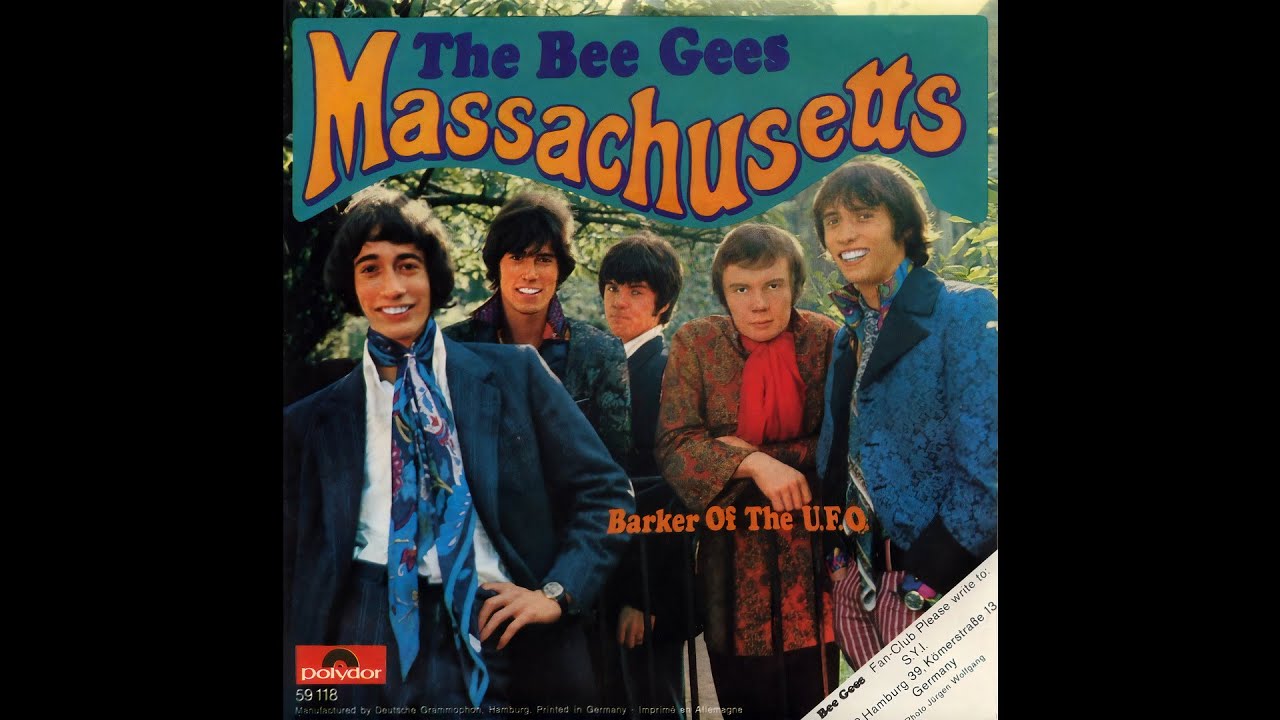
It is also worth remembering how young the Gibb brothers were when they wrote and recorded much of their early material. Their songs often carried a maturity that seemed beyond their years. They understood loneliness, separation, and uncertainty with unusual sensitivity, perhaps because movement had already shaped their own family history. Born on the Isle of Man, raised partly in Manchester, and later living in Australia before returning to Britain, the brothers knew what it meant to leave one place and attempt to build a future somewhere else.
That background gives “Massachusetts” an added layer of authenticity. Although the song’s narrator speaks about an American destination, the emotional truth came from writers who understood migration personally. The Gibbs had experienced the excitement of beginning again, but they also knew that a new beginning does not erase attachment to the past. A person may travel far and still remain emotionally connected to the place where important memories were formed.
The song therefore belongs to a long tradition of music about homecoming. Folk songs, country ballads, gospel hymns, and popular standards have often explored the difference between leaving and returning. In such songs, home is rarely just a building. It represents identity. It is the place where a person is known without explanation and where memories seem to live independently of time.
“Massachusetts” approaches this tradition without sentimentality. The narrator does not claim that everything at home was perfect. His longing grows because he now understands its value more clearly. This distinction gives the song emotional intelligence. Regret is not presented as weakness; it is presented as recognition. Sometimes people must travel away from something before they understand what it meant to them.
Older listeners may find this idea especially moving. As the years pass, familiar places acquire greater significance. A street, a kitchen, a railway station, or a family garden can hold entire chapters of life. Returning physically may not always be possible, and even when it is, the place may have changed. Music becomes a way of returning when geography and time no longer permit it.
That may explain why “Massachusetts” continues to resonate across generations. Younger listeners may hear a graceful song about homesickness, while older listeners may hear the deeper sorrow of knowing that some homes exist only in memory. The song changes as the listener changes. What sounds like a simple journey in youth may later feel like a meditation on aging, absence, and the fragile nature of belonging.
The Bee Gees would go on to transform themselves repeatedly, moving through orchestral pop, emotional ballads, rhythm-driven recordings, and some of the most commercially successful music of the modern era. Their later achievements were so enormous that they sometimes overshadowed the quiet beauty of their earlier work. Yet “Massachusetts” reminds us that the foundation of their greatness was already present: memorable songwriting, family harmony, and an extraordinary ability to express vulnerability without exaggeration.
There is also something deeply comforting about the song. Although it is shaped by regret, it is not without hope. The desire to return suggests that the connection has not been completely lost. The lights may have gone out, but the memory of home still calls the traveler back. The journey may have been painful, yet recognition creates the possibility of reconciliation.
More than half a century after its release, “Massachusetts” remains one of the clearest examples of how a modest song can carry an enormous emotional world. It does not rely on complexity, volume, or spectacle. It trusts the strength of a beautiful melody and the honesty of three brothers singing about a place that has become larger in memory than it ever appeared in reality.
In the hands of Barry, Robin, and Maurice Gibb, Massachusetts became more than a location on a map. It became a universal destination—the place we leave, the place we remember, and the place some part of us is always trying to find again.
Video