Introduction
THE CANCER STORY THAT SHOCKED GEORGE STRAIT FANS — AND THE TRUTH THAT MATTERS MORE THAN A FRIGHTENING HEADLINE
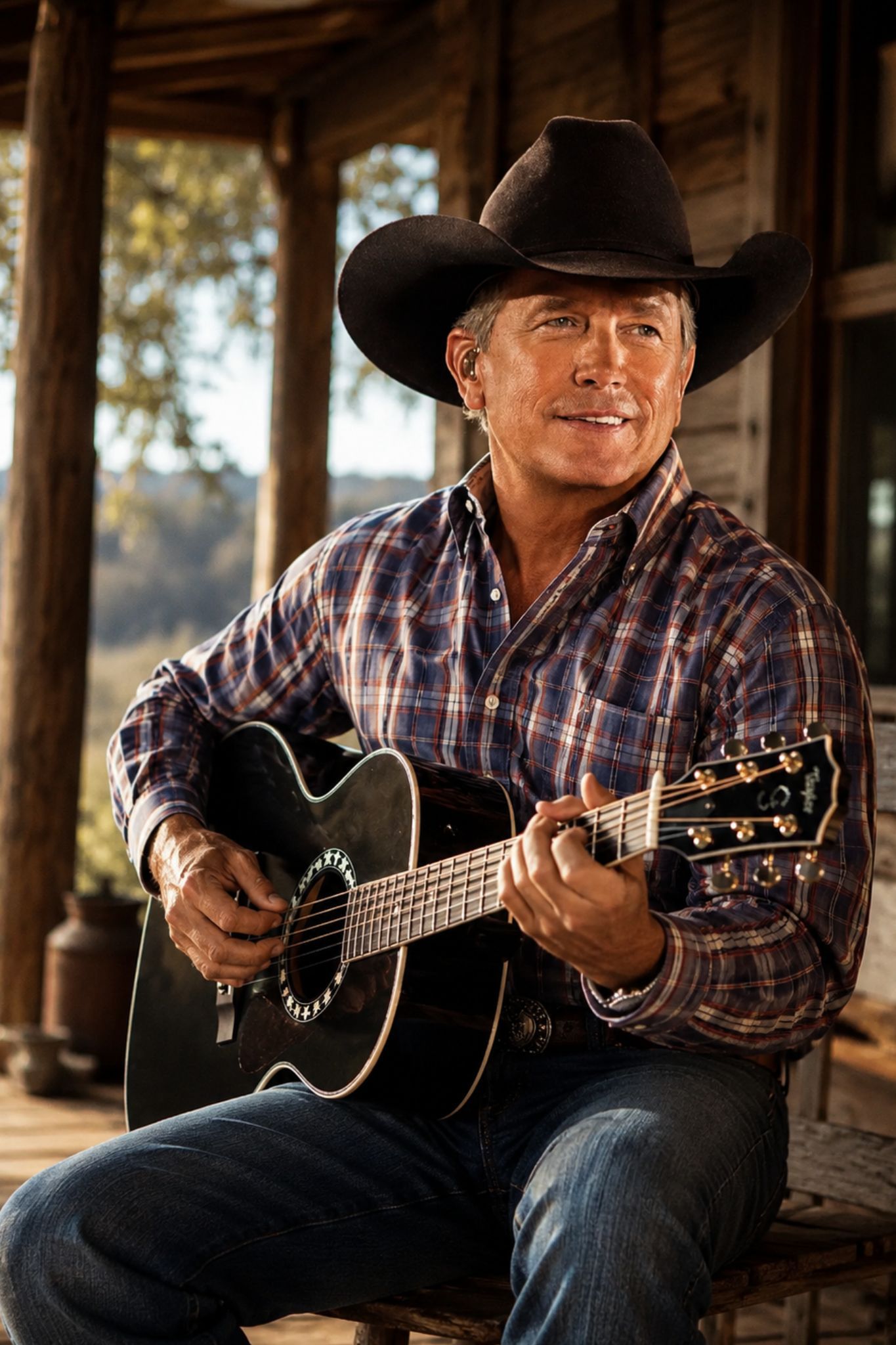
A disturbing story has circulated online claiming that George Strait is battling stomach cancer, underwent major surgery, lost much of his stomach and esophagus, and may soon require another course of chemotherapy. The account includes emotional quotations attributed to the country legend, along with an alleged message of support from his son. Written in the language of a dramatic personal confession, it is precisely the kind of story capable of spreading quickly among people who have admired George for more than four decades.
There is one critical problem: the cancer diagnosis has not been verified.
As of July 10, 2026, no credible announcement confirming such a diagnosis appears on George Strait’s official website, and the quoted interview does not identify the publication, journalist, hospital, physician, or representative responsible for the information. Current reporting has instead documented George appearing before large audiences during his 2026 concert dates. He performed two sold-out concerts in Lubbock, Texas, on April 24 and 25, drawing more than 133,000 people across the two evenings, and additional appearances were scheduled for Clemson and Austin in May.
The story also says George is “only 73.” However, his official biography records his birth date as May 18, 1952, meaning that he turned 74 in May 2026. His official family information identifies his son as George Strait Jr., known as Bubba, but there is no reliable evidence in the sources reviewed that Bubba published the quoted cancer message attributed to him. These inconsistencies do not prove every line was deliberately fabricated, but they are serious warning signs that the account should not be presented as established fact.
:max_bytes(150000):strip_icc():focal(714x182:716x184)/george-strait-061724-2-c4538e80d0294431a8cc378e7ceeaf80.jpg)
For loyal listeners, discovering that such a claim may be false does not make the emotional reaction to it foolish. George Strait occupies a deeply personal place in country music. His songs have accompanied weddings, long journeys, family gatherings, military service, heartbreak, faith, and the quiet routines of ordinary life. When readers encounter a headline suggesting that he is fighting for survival, they are not responding merely to celebrity news. They are reacting to the possibility of losing a voice connected to decades of their own memories.
That emotional bond is exactly why accuracy matters.
George has earned affection not through constant publicity but through consistency, dignity, and an unusually restrained public character. While many performers built their identities through interviews and dramatic self-promotion, he generally allowed the music to speak for him. His calm manner, traditional sound, cowboy background, and refusal to chase every passing trend created the impression of a dependable figure—someone who remained recognizably himself while the entertainment world changed around him.
George Strait was born in Poteet, Texas, and raised near Pearsall, where he and his older brother helped their father on the family ranch. His parents separated while he was still in grade school, and his father, a mathematics teacher, raised the boys. The ranch work was not a carefully manufactured part of a future stage image. It was an authentic element of his upbringing, teaching him responsibility and connecting him with the South Texas landscape that later became inseparable from his music.
His early musical journey was less straightforward than later legend sometimes suggests. During high school, George was initially attracted to British Invasion rock music and played in garage bands. After marrying his longtime sweetheart, Norma, he entered the United States Army. While stationed in Hawaii, he auditioned successfully for a military country band and began studying the music of Hank Williams, George Jones, Merle Haggard, and Bob Wills. That experience helped direct him toward the traditional country and Western swing styles that would define his career.
After military service, he returned to Texas, studied agriculture at Southwest Texas State University, and performed with the Ace in the Hole Band. The group developed a regional following in dance halls and clubs, but national success did not arrive immediately. George made several unsuccessful trips to Nashville before manager Erv Woolsey helped him secure a contract with MCA in 1981. His first major single, “Unwound,” reached the country Top Ten and announced the arrival of a performer whose understated style stood apart from many of the fashionable sounds surrounding him.
George rarely depended on vocal theatrics. His strength came from subtle phrasing and emotional control. He could sing about devotion, regret, loneliness, or home without making the feeling appear exaggerated. That apparent simplicity required considerable discipline. Songs such as “The Chair,” “Amarillo by Morning,” “I Cross My Heart,” “Check Yes or No,” and “Troubadour” became enduring standards because George trusted the story and allowed listeners to discover their own lives inside it.
His personal history also contains genuine sorrow that does not require fictional embellishment. In 1986, his thirteen-year-old daughter, Jenifer, died in an automobile accident. George and Norma responded privately, and he rarely discussed the loss publicly. When he accepted the Country Music Association’s Male Vocalist of the Year honor that year, he dedicated it to her memory. His son Bubba, born in 1981, later contributed as a songwriter to several of his father’s recordings.
These verified chapters reveal a man who has already endured hardship, disappointment, grief, and the pressures of an extraordinary career. They also explain why an invented illness narrative is unnecessary. George Strait’s authentic life contains more than enough courage, resilience, and emotional depth. Turning an unverified medical claim into entertainment does not honor him. It places words in his mouth, worries his family and listeners, and risks making people suspicious when genuine news eventually needs their attention.
The rumor is particularly questionable when considered beside his recent public activity. In April 2026, George performed two sold-out nights in Lubbock and publicly thanked the more than 133,000 fans who attended. Reports described him addressing the crowd, joking after momentarily confusing the name of an opening performer, and continuing through the concert program. The appearance does not reveal every private detail of his health, and no responsible observer should diagnose a performer from photographs or short videos. It does, however, demonstrate why claims of major surgery and a grave prognosis require much stronger evidence than an anonymous online post.
George’s official biography and the Country Music Hall of Fame describe him as one of the most successful and influential recording artists in country music. He was inducted into the Hall of Fame in 2006, has achieved forty-four number-one songs on Billboard’s country chart, and ranks behind only Elvis Presley and the Beatles among artists with the greatest number of gold- and platinum-certified albums. Even after concluding his full-scale touring career, he continued performing at selected venues and major events.
Those achievements explain why alarming stories about him attract immediate attention. The name George Strait represents stability within a genre that has undergone enormous change. Many fans regard him as one of the remaining links to an era when storytelling, melody, restraint, and recognizable country instrumentation stood at the center of popular music. A frightening headline about his health can therefore feel like news about the possible disappearance of an entire tradition.
Yet admiration should make readers more careful, not less careful.
A genuine announcement about a serious illness would normally be supported by an identifiable interview, an official representative, a family statement, or reporting from multiple established news organizations. The cancer account supplied here offers none of those foundations. Instead, it relies on dramatic quotations, uncertain attribution, and emotionally charged language. Until George Strait or an authorized representative confirms such information, the responsible conclusion is that the stomach-cancer story remains unsubstantiated.
Fans can still express concern for George without repeating a frightening diagnosis as fact. They can celebrate his recent performances, revisit the songs that shaped their lives, and follow reliable updates through his official channels. Most importantly, they can remember that a private individual—even one as famous as the King of Country—deserves dignity when questions about health arise.
George Strait’s real story is not defined by an unverified cancer headline. It is the story of a Texas ranch boy who found his musical direction while serving in the Army, endured repeated rejection, protected traditional country music when the industry was moving elsewhere, survived profound family sorrow, and built one of the most consistent careers in American recording history.
That story does not need invented surgery, fabricated quotations, or premature farewells to become moving. The truth is already powerful enough.