Introduction
Elvis Presley’s Final Television Performance—The Night America Watched the King Summon One Last Measure of Greatness
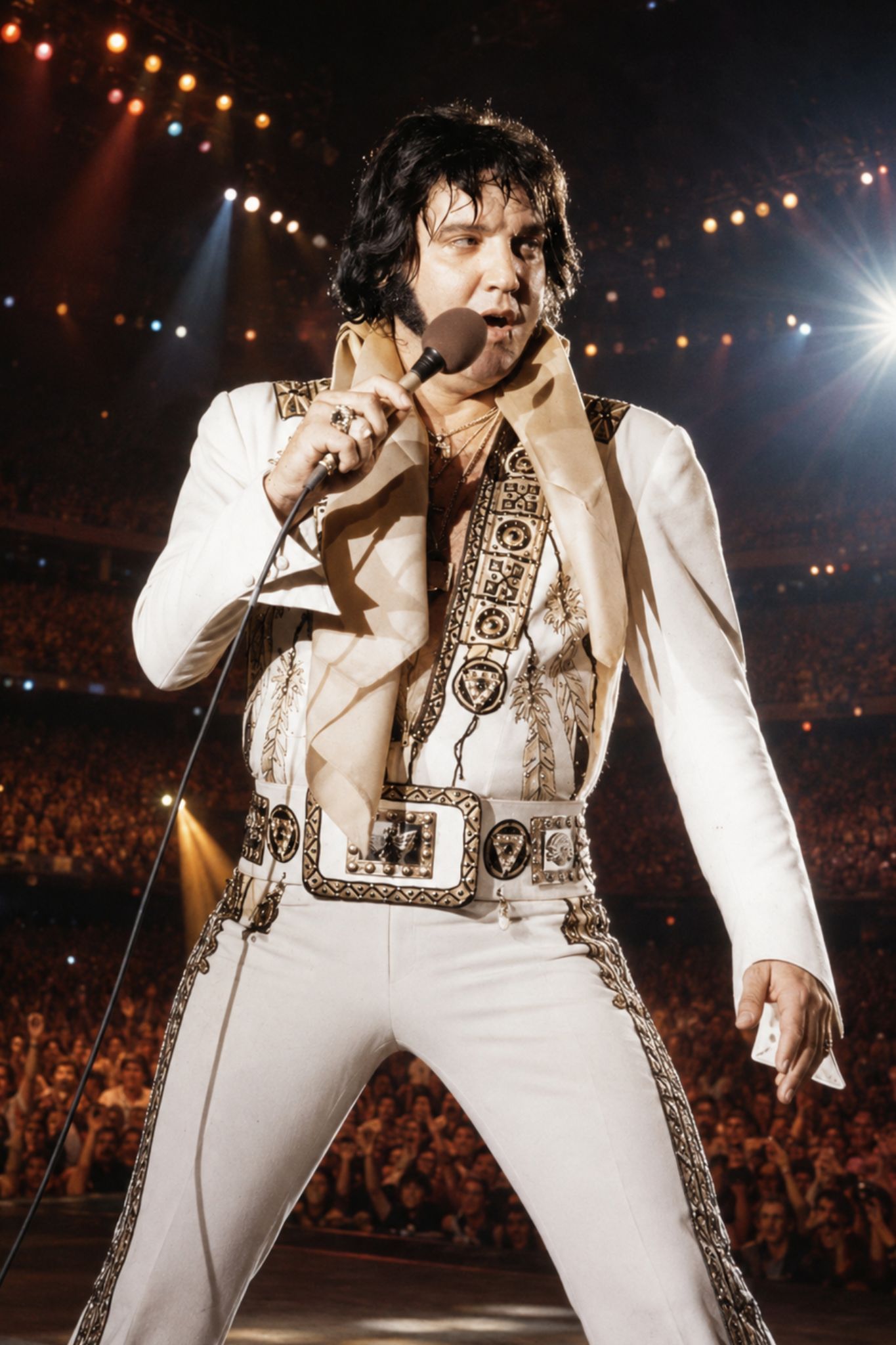
In June 1977, Elvis Presley walked onto a concert stage for what would become part of his final television special, and the sight was immediately difficult to forget. The man beneath the lights was still only 42 years old, yet the years of relentless touring, pressure, illness, and exhaustion seemed visible in every movement. He looked markedly different from the young performer who had once transformed American popular culture with astonishing confidence and energy. But then the orchestra began, Elvis raised the microphone, and something remarkable happened. Whatever physical weakness surrounded him, the unmistakable voice of Elvis Presley was still capable of commanding the room.
That contradiction is what makes the footage preserved for the CBS special Elvis in Concert so powerful more than four decades later. It is not simply a concert film, nor is it comfortable nostalgia. It captures a legendary performer at an extraordinarily vulnerable moment, when the mythology of the King of Rock ’n’ Roll collided with the unmistakable reality of a human being struggling to continue doing the thing that had defined his life. Audiences watching today already know what the people inside those arenas did not: Elvis Presley had only weeks left to live.
The television special drew primarily from concerts filmed in Omaha, Nebraska, on June 19, 1977, and Rapid City, South Dakota, on June 21. Cameras were brought in to document the performances, creating a visual record of Elvis during the closing weeks of his life. At the time, those evenings were still presented as concerts in an ongoing career. Fans arrived expecting the songs they loved, the familiar introductions, the white stage costumes, and the presence of an entertainer whose name had already become inseparable from American music history.
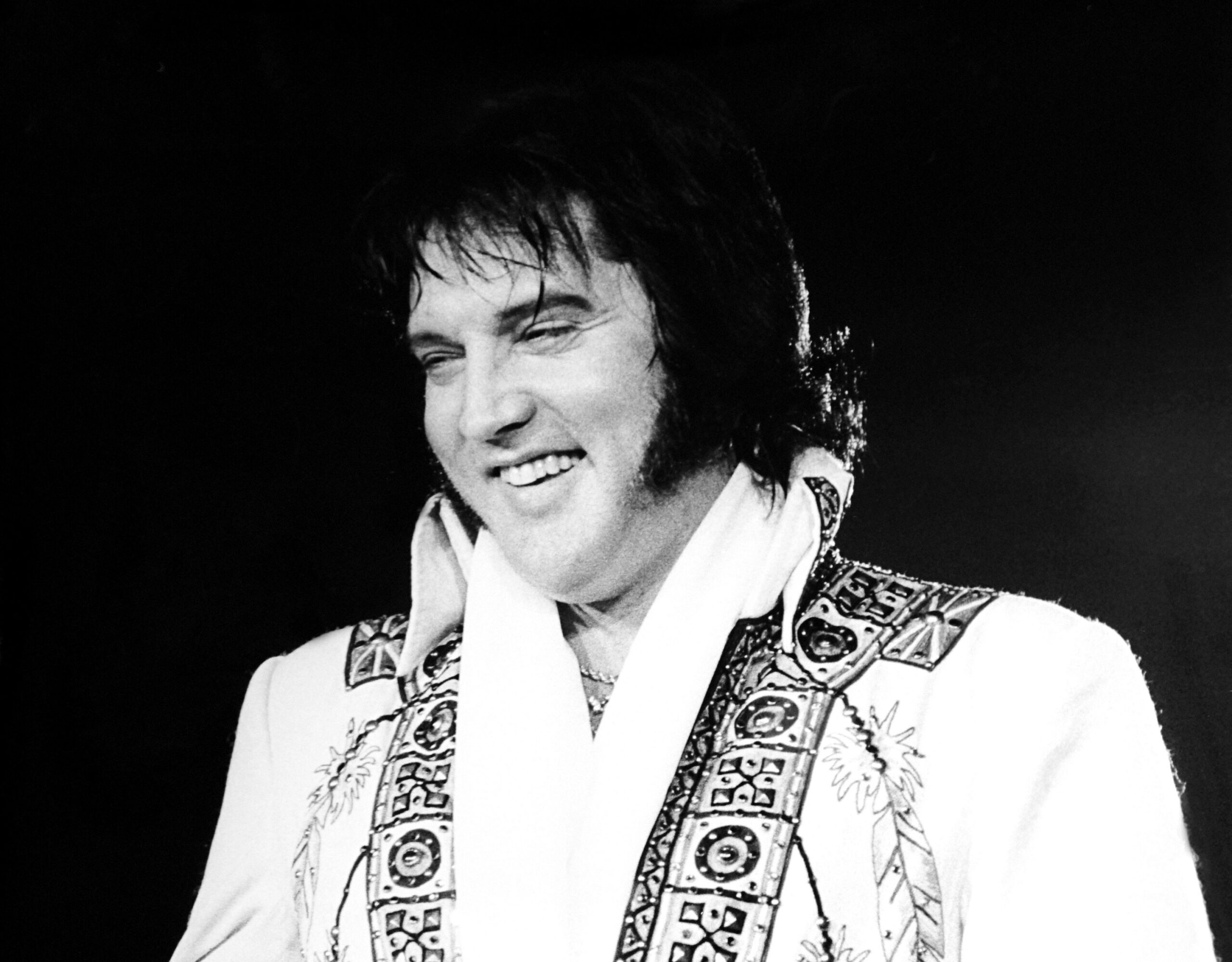
No one in the audience could have understood the historical weight of what was happening.
That knowledge transforms the footage for modern viewers. Every smile seems more fragile. Every pause feels heavier. Every song carries the uncomfortable awareness that there would be very few performances after these nights. Yet it would be unfair to watch Elvis in 1977 only through the lens of decline. The deeper story lies in the moments when the performer seemed to rise above his circumstances and remind everyone why his voice had mattered so much in the first place.
Elvis had always possessed a remarkable ability to communicate emotion without sounding distant from his audience. His greatest performances rarely felt like demonstrations of technical perfection. Instead, they felt personal. He could take a song written by someone else and sing it as though it contained something from his own private history. By 1977, that quality had acquired an entirely different weight. His voice carried experience, fatigue, sadness, and determination in ways that the young Elvis of the 1950s could never have imitated because he had not yet lived through those years.
This is why the final CBS concert footage remains so affecting for older and knowledgeable listeners. Those who remember Elvis during his rise witnessed one of the most dramatic transformations in modern entertainment. They saw the young Southern singer who seemed almost dangerously new become a movie star, a Las Vegas headliner, a global icon, and eventually a performer increasingly burdened by the very machinery of fame that had elevated him.
By the summer of 1977, that burden was difficult to conceal.

Still, when Elvis sang, the old authority could suddenly return. There were moments when the physical vulnerability seemed almost to disappear behind the strength of the music. A phrase would open up, the voice would deepen, and the room would respond with the recognition that the performer they had come to see was still present. He might no longer have looked like the fearless young man who had first shocked television audiences, but the emotional instinct that made Elvis extraordinary remained intact.
The contrast between his appearance and his voice is central to understanding the lasting impact of these performances. It forces the viewer to abandon the comfortable mythology of an invincible superstar. Elvis Presley was not invincible, and the 1977 footage does not allow us to pretend otherwise. Yet vulnerability does not erase greatness. In some respects, it makes the greatness more visible because every successful note appears to require something deeper than routine professionalism.
The television audience would not see Elvis in Concert until October 3, 1977, after Elvis had died on August 16. By the time CBS broadcast the special, the context had changed completely. What had been filmed as a contemporary concert program had become, inevitably, a document of loss. American viewers were no longer watching a star who might return the following year with another tour or television appearance. They were looking at one of the final filmed chapters of a career that had ended without warning.
That is why Elvis in Concert remains both difficult and unforgettable. It does not offer the polished triumph of the 1968 comeback special or the commanding confidence of his strongest Las Vegas years. Instead, it shows an artist near the end of his endurance, still searching for the next phrase, the next note, and the next connection with the audience.
And perhaps that is the most powerful legacy of those June 1977 performances. America did not see an untouchable King. It saw a man struggling beneath the weight of his own legend—and still finding enough strength to sing. The final notes are haunting not because they belong to a flawless performance, but because we now understand how close they were to silence.
The lights eventually went dark. The television special became history. But whenever that footage plays again, Elvis Presley steps back beneath the spotlight, and for a few extraordinary minutes the King is not gone at all.