Introduction
The Elvis Mystery That Refuses to Die—Why the Bob Joyce Theory Keeps Returning, and What the Evidence Really Says
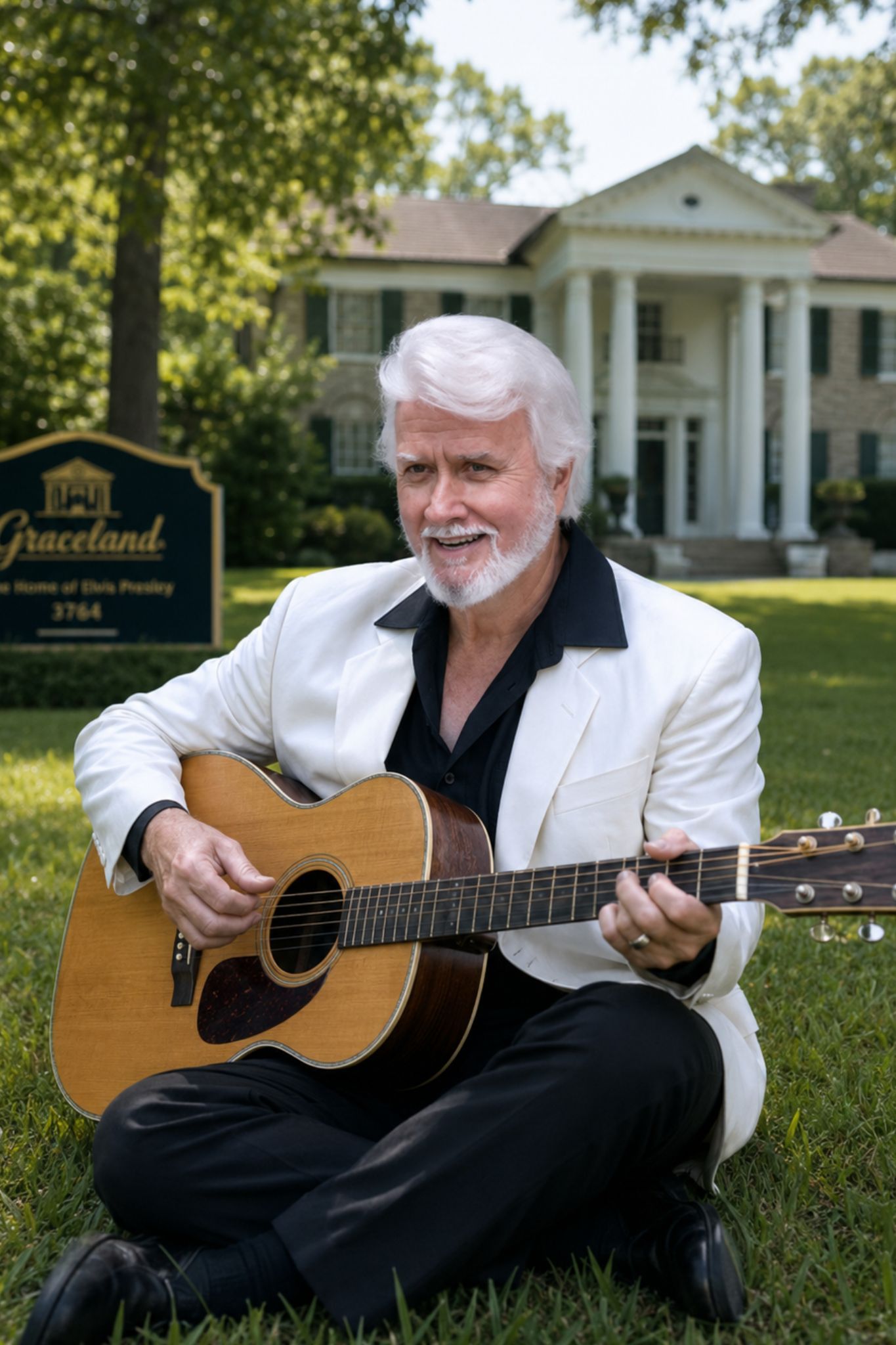
Few entertainers have inspired as much fascination, devotion, and mythology as Elvis Presley. Nearly half a century after his death on August 16, 1977, the King of Rock ’n’ Roll remains so deeply embedded in popular culture that even the most improbable stories about his survival can find an eager audience. Among the strangest and most persistent is the claim that Arkansas gospel preacher Bob Joyce might somehow be Elvis Presley living under another identity. In recent years, dramatic online posts have gone even further, circulating alleged statements attributed to Priscilla Presley that supposedly confirm the theory. Yet despite sensational headlines suggesting a stunning revelation, there is no credible evidence that Priscilla has publicly authenticated Bob Joyce as Elvis. The available record instead points to a much more intriguing story: not of a hidden Elvis, but of how powerful a legend can become when fans are unwilling to let it end.
The Bob Joyce–Elvis Presley theory grew largely from comparisons made by online communities. Supporters point to perceived similarities in vocal tone, facial expressions, gestures, and the emotional quality of Joyce’s gospel performances. For those already fascinated by decades of Elvis survival theories, such similarities can feel tantalizing. A familiar phrase, a certain movement of the head, or the resonance of a low note becomes something to examine frame by frame. But resemblance is not identity, and the transformation of coincidence into supposed evidence is one of the reasons this mystery has continued for so long.
The most important fact is also the simplest: Bob Joyce himself has denied being Elvis Presley. In a reported response to the speculation, Joyce said directly that he was not Elvis, even while acknowledging that some people continued to see what they wanted to see in his performances. That denial has done surprisingly little to stop the theory. In fact, for committed believers, almost any denial can be absorbed into the mythology as further proof that a secret must be protected.

This is where Priscilla Presley’s name has become especially powerful. Online posts have circulated dramatic claims suggesting that she finally admitted Bob Joyce was her former husband. Yet searches for reliable reporting or a verifiable interview supporting such a statement do not produce credible confirmation. Instead, the most sensational versions appear in social-media posts and speculative videos rather than established interviews or documented statements. Some of those posts even contradict one another, illustrating how quickly the story can change as it travels across the internet.
The historical record surrounding Elvis Presley’s death in 1977 is considerably less mysterious. Elvis died at Graceland on August 16, 1977, and his death was documented by family members, associates, medical personnel, official records, and the events that followed. Survival theories began appearing almost immediately afterward and eventually developed into a remarkable subculture of supposed sightings, hidden identities, secret clues, and alleged coded messages. Over the decades, numerous unrelated men have been proposed as Elvis living secretly under another name. Bob Joyce is simply one of the most recent and persistent figures to occupy that role.
And yet dismissing the theory does not mean dismissing the emotions behind it. For older fans who remember Elvis as a living cultural phenomenon, his death represented something far greater than the disappearance of a famous singer. Elvis had been part of their youth. His records played in family homes, cars, restaurants, dance halls, and on radios late at night. He had become attached to memories of adolescence, marriage, military service, changing America, and the arrival of a new musical age. When someone becomes intertwined with so many personal memories, accepting the finality of death can be strangely difficult.
That is why the Bob Joyce mystery says as much about Elvis fans as it does about Bob Joyce himself. People hear a familiar vocal quality and suddenly encounter something they thought had disappeared forever. The reaction can be emotional before it is analytical. For a moment, the possibility becomes irresistible: what if the King never truly left?
But Elvis never needed to disappear secretly in order to remain alive culturally. His records continue playing. His filmed performances continue attracting new audiences. His 1968 comeback special, his early recordings, his Las Vegas years, and the final performances of 1977 remain accessible in extraordinary detail. Every generation can encounter Elvis Presley’s voice almost as immediately as the audiences who first heard it.
Priscilla herself has continued discussing Elvis publicly over the years, including memories of their marriage, his personality, his career frustrations, and the complicated man behind the mythology. Recent interviews have continued to treat Elvis as the extraordinary but deceased figure whose influence shaped her life, not as someone secretly living under another identity. That makes the sensational claim of a sudden Bob Joyce revelation even more important to approach carefully.
Perhaps the true mystery, then, is not whether Bob Joyce is Elvis Presley. The more interesting question is why millions of people remain susceptible to the idea that Elvis must somehow still be physically present. Part of the answer lies in the scale of his fame. Elvis did not simply become successful; he became symbolic. He represented youth, transformation, rebellion, gospel roots, Southern culture, Hollywood, Las Vegas, and the extraordinary possibilities and costs of celebrity.
When a figure becomes that large, death can feel strangely inadequate as an ending.
That is why the rumors continue. A photograph appears. A voice sounds familiar. Someone posts an alleged confession. Within hours, thousands of people are debating whether history has been rewritten. But fascination should not be confused with evidence.
There is no verified basis for claiming that Priscilla Presley has revealed Bob Joyce to be Elvis Presley, and Bob Joyce has publicly denied being Elvis. The story survives because mystery is sometimes more emotionally satisfying than certainty.
And perhaps that is the final irony. Fans keep searching for Elvis in another man’s face when the real Elvis has never been particularly difficult to find. Put on one of those records, watch him walk beneath the lights, and listen to the first unmistakable phrase.
The King is still there—just not in the way the conspiracy requires.